


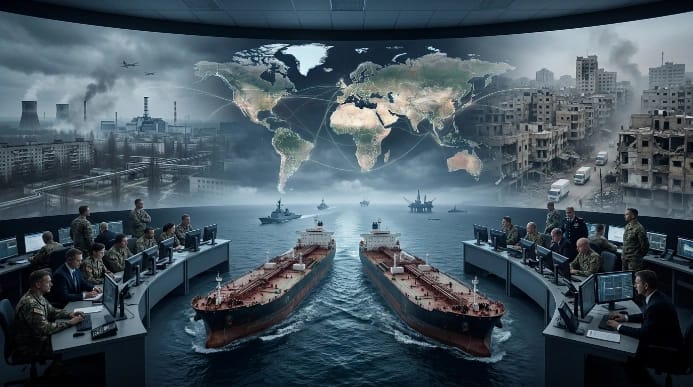
Global Conflict Update 2026: Flashpoints and Their Implications
The world’s major conflicts are entering another dangerous phase.
In the Middle East, the military confrontation involving Iran and the United States has shifted into an unstable standoff. Large-scale fighting has eased, but negotiations remain stalled, the Strait of Hormuz remains heavily disrupted, and Washington is preparing another major round of economic pressure against Tehran.
In Europe, the Russia-Ukraine war is increasingly becoming a battle against economic infrastructure. Ukrainian drones are striking deeper into Russia, while Moscow is threatening heavier retaliation and continuing deadly attacks inside Ukraine.
Meanwhile, Gaza remains trapped between diplomatic efforts and recurring violence, with recent Israeli strikes drawing condemnation from mediators trying to preserve a path toward a broader settlement.
These conflicts are geographically separate.
Economically and strategically, they increasingly overlap.
Wars affect oil supplies.
Oil affects inflation.
Attacks on ports affect food exports.
Shipping disruptions affect global trade.
Military demand affects government budgets.
And geopolitical rivalry increasingly determines where countries obtain energy, weapons and technology.
That makes a global conflict update in 2026 about much more than battlefield developments.
Here are five flashpoints that matter most right now—and what could happen next.
1. Iran and the United States: Fighting Has Slowed, but the Crisis Is Far From Over
The most immediate global economic risk remains the confrontation involving Iran and the United States.
The current situation is unusual.
Large-scale military engagement has paused, but there is no comprehensive peace agreement resolving the underlying conflict.
Instead, Washington and Tehran appear trapped between diplomacy and renewed escalation.
The United States is preparing a new sanctions campaign against Iran. U.S. Treasury Secretary Scott Bessent has described the planned measures as extraordinarily severe, while Washington is also increasing pressure on countries that continue supporting Tehran.
Iran has responded with warnings of retaliation.
This creates a dangerous dynamic.
Neither side appears eager to immediately return to full-scale warfare.
But neither side has resolved the issues that produced the conflict.
That leaves military pressure, economic sanctions and the Strait of Hormuz as bargaining tools.
The United Nations has previously warned that renewed full-scale hostilities would have severe consequences for the region and global economy, while calling for negotiations and the restoration of freedom of navigation through Hormuz. Its official statement on the Middle East confrontation provides useful context on why the waterway has become central to diplomatic efforts.
The next phase may therefore look less like conventional continuous warfare and more like prolonged coercion.
Sanctions.
Shipping pressure.
Threats.
Limited attacks.
Diplomatic negotiations.
And occasional escalations.
That may actually make the conflict more difficult to predict.
2. The Strait of Hormuz Has Become the World’s Most Dangerous Economic Chokepoint
The Iran confrontation matters globally because of geography.
The Strait of Hormuz connects the Persian Gulf with the Arabian Sea and the wider global shipping network.
Before the war, more than 20 million barrels of oil per day moved through the waterway, according to U.S. figures cited by Reuters. Current flows have fallen dramatically.
Iran continues exercising substantial control over passage.
On August 22, Tehran granted special permission for some Iraqi oil tankers to pass through Hormuz after requests from Baghdad.
That development illustrates how abnormal the situation remains.
Oil exporters cannot simply assume unrestricted access to one of the world’s most important energy routes.
And that means the conflict has become an economic weapon.
The consequences extend well beyond oil-producing countries.
When tanker traffic falls:
oil supply becomes tighter,
shipping costs increase,
insurance becomes more expensive,
fuel prices can rise,
and inflation risks increase.
The Light Span’s analysis of why oil remains a major risk to the global economy explains the unusual situation now facing energy markets.
Demand has weakened.
But supply remains disrupted.
That creates two forces pulling prices in opposite directions.
Recent political threats have already demonstrated how quickly markets can react. Oil prices jumped more than 2% on August 20 after Washington threatened economic consequences against countries supporting Iran.
Hormuz therefore remains one of the most important indicators to watch.
If traffic begins normalizing, energy markets could receive significant relief.
If disruption worsens, the global economic consequences could spread quickly.
3. Russia and Ukraine Are Increasingly Targeting Each Other’s Economic Capacity
The Russia-Ukraine war is now well into its fifth year.
But the character of the conflict continues evolving.
One increasingly important development is the expanding use of drones against economic infrastructure.
Ukraine has intensified attacks against targets inside Russia, including oil facilities, industrial sites and logistics infrastructure.
On August 22, Ukrainian drone attacks hit several locations across Russia and Russian-controlled territory. Ukraine said it targeted the Novokuibyshevsk oil refinery, while other strikes hit industrial and logistics facilities. Russian authorities reported substantial casualties and said hundreds of Ukrainian drones were intercepted overnight.
Russia is threatening retaliation.
President Vladimir Putin accused Ukraine of opening what he called a “Pandora’s box” by targeting Russian economic infrastructure and warned that Moscow could respond against sensitive sectors of the Ukrainian economy.
This creates a worrying shift.
The battlefield is expanding beyond military positions.
Refineries.
Warehouses.
Ports.
Energy systems.
Transport infrastructure.
Agricultural facilities.
All can influence a country’s ability to continue fighting.
Ukraine has strong incentives to target Russian energy infrastructure because petroleum exports remain economically important to Moscow.
Russia has similar incentives to attack Ukrainian infrastructure and exports.
The danger is that this strategy can affect countries far beyond the battlefield.
Ukraine remains an important agricultural exporter.
Damage to ports and grain infrastructure can influence global food markets, particularly in countries heavily dependent on Black Sea supplies.
The conflict therefore demonstrates why the battle over global shipping routes has become such an important geopolitical issue.
Modern wars do not remain neatly contained inside national borders.
Their economic consequences travel through trade networks.
4. Civilian Costs Are Rising as the Ukraine Air War Intensifies
The infrastructure war is only part of the story.
Civilians continue paying an enormous price.
A Russian strike on a shopping center in Kryvyi Rih on August 21 killed at least 16 people and injured more than 130, according to Ukrainian officials cited by Reuters. The attack was followed by another drone roughly half an hour later, which Ukrainian authorities said endangered rescuers responding to the first strike.
Ukraine is seeking additional air-defense support.
On August 22, Ukrainian President Volodymyr Zelenskiy said French President Emmanuel Macron had agreed to accelerate deliveries of equipment and assist Kyiv in efforts to secure additional Patriot interceptors from allies.
This illustrates one of Ukraine’s biggest strategic challenges.
Drone and missile warfare is relatively persistent.
Defending against it requires large numbers of interceptors, radar systems and other equipment.
That creates a war of industrial capacity as much as battlefield tactics.
Can Russia manufacture and deploy enough missiles and drones?
Can Ukraine and its allies produce enough air-defense systems and interceptors?
Can Ukraine continue striking Russian infrastructure deeply enough to affect Moscow’s war economy?
These questions could become increasingly important if negotiations remain stalled.
The United Nations has already warned that the Ukraine conflict has entered one of its deadliest periods for civilians since the full-scale invasion began. Its assessments emphasize the growing impact of long-range weapons and continued attacks on populated areas.
The war therefore shows few signs of reaching a clean military conclusion.
Instead, both sides appear increasingly focused on weakening the other’s ability to sustain the conflict.
5. Gaza Remains Caught Between Diplomacy and Continuing Violence
The Gaza conflict presents a different but equally fragile situation.
Diplomatic efforts continue.
But violence has not ended.
Turkey, Egypt and Qatar—the countries involved in mediation efforts—condemned recent Israeli attacks in Gaza and warned that they could undermine attempts to move negotiations forward.
The United Nations Human Rights Office reported that at least 22 Palestinians were reportedly killed in Israeli military attacks between August 13 and 19.
Its August 21 Gaza update documented strikes affecting civilian locations and warned that people remain exposed to unpredictable lethal violence despite the broader ceasefire framework.
Israel has argued that continuing military action is necessary against armed threats.
But the humanitarian situation remains severe.
UNRWA’s August assessment says Gaza’s healthcare system remains deeply degraded following years of conflict, with shortages of medicines, medical supplies, fuel and functioning infrastructure.
That means even limited renewed violence can have consequences much larger than the immediate attack.
A functioning society needs more than the absence of major military operations.
Hospitals need supplies.
Water systems need repairs.
People need housing.
Food needs to reach markets.
Police and civilian institutions need to function.
Infrastructure needs reconstruction.
Without these conditions, a ceasefire can reduce fighting without producing genuine recovery.
The diplomatic challenge is therefore becoming increasingly complicated.
Negotiators are not merely trying to stop another round of attacks.
They are trying to create a political and security framework capable of preventing the conflict from repeatedly restarting.
6. The West Bank Is Becoming Another Major Source of Instability
Gaza receives more international attention, but conditions in the occupied West Bank are also deteriorating.
The United Nations warned earlier this month that the territory was approaching a breaking point amid rising settler violence, movement restrictions and continuing clashes.
UN reporting indicated that 76 Palestinians and three Israelis had been killed in the West Bank in 2026 as of August 10.
Recent violence has continued.
A Palestinian teenager was killed during a confrontation involving Israeli settlers on August 21, while other incidents added to growing tensions.
This matters because instability in the West Bank can complicate Gaza diplomacy.
The Israeli-Palestinian conflict does not operate in isolated geographic compartments.
Developments in:
Gaza,
the West Bank,
Jerusalem,
Lebanon,
Syria,
and the wider Middle East
can interact politically.
Escalation in one area can rapidly increase tensions elsewhere.
That creates another obstacle to a durable regional settlement.
Even if fighting in Gaza declines, broader Israeli-Palestinian tensions remain unresolved.
7. The Middle East Conflict Is Becoming Bigger Than Iran and Israel
One of the most important geopolitical lessons of 2026 is how quickly regional conflicts can spread economically and politically.
The confrontation involving Iran has already affected Gulf states, energy markets and international shipping.
Gaza continues influencing relations between Israel and regional governments.
Turkey-Israel tensions have also intensified.
Turkey announced that it intends to seek an Interpol red notice against Israeli Prime Minister Benjamin Netanyahu following a domestic criminal case linked to the interception of a Gaza-bound aid flotilla. Israel rejected the move.
Meanwhile, tensions involving Syria add another layer of uncertainty.
This is why treating the Middle East as several completely separate conflicts can be misleading.
The region increasingly functions as an interconnected geopolitical system.
Iran’s actions affect Gulf states.
Gulf tensions affect oil.
Oil affects the global economy.
Israeli actions influence relations with Turkey and Arab governments.
U.S. policy affects all of them.
The global economy is already becoming more fragmented partly because security considerations increasingly influence trade, technology and energy relationships.
Conflict accelerates that transformation.
What About Sudan and Other Underreported Conflicts?
The world’s conflict map extends far beyond Ukraine and the Middle East.
Sudan’s civil war remains one of the world’s most severe humanitarian crises.
Parts of the Sahel continue facing insurgencies and political instability.
The Democratic Republic of Congo remains affected by armed conflict.
Somalia continues dealing with insecurity alongside a worsening humanitarian situation.
These conflicts receive less global financial coverage because they do not always threaten major oil routes or involve nuclear powers.
But their human consequences are enormous.
This reveals an uncomfortable reality about international attention.
Conflicts become global headlines not simply because of how many people suffer, but because of their strategic consequences.
A confrontation around Hormuz can move oil prices within minutes.
A Russia-Ukraine escalation can affect NATO security and global food exports.
Tensions around Taiwan can influence the semiconductor industry.
Other wars can remain devastating while receiving comparatively little attention.
That distinction is important when interpreting any global conflict update.
The Bigger Risk: Multiple Conflicts Are Beginning to Interact
The greatest danger may not be any one conflict.
It may be several crises occurring simultaneously.
Consider the connections.
Iran disrupts Hormuz.
Oil prices rise.
Inflation increases.
Central banks become more cautious about cutting interest rates.
Economic growth weakens.
Russia and Ukraine attack energy infrastructure.
Fuel markets tighten further.
Shipping becomes more expensive.
Governments increase defense spending.
Public debt rises.
Trade routes become more politically sensitive.
Companies redesign supply chains.
These events begin reinforcing one another.
That is why the new global economy increasingly looks different from the globalization model of previous decades.
Businesses are no longer optimizing purely for cost.
Governments are no longer treating energy supplies purely as commercial questions.
Technology is no longer simply an economic industry.
Security considerations are entering all three.
The global economy is becoming more geopolitical.
Could Any of These Conflicts Escalate Into a Wider War?
Yes, although a broader global war is not inevitable.
The most dangerous escalation paths are relatively clear.
A major resumption of U.S.-Iran military operations could trigger further attacks on Gulf infrastructure and shipping.
A severe incident involving Russia and a NATO member could dramatically expand the Ukraine crisis.
A wider Middle Eastern escalation could draw additional regional governments into direct confrontation.
Misunderstanding is another danger.
Modern military systems operate quickly.
Drones can cross borders.
Missiles can be misidentified.
Cyberattacks can be difficult to attribute.
Political leaders may feel pressured to retaliate before all facts are known.
The more countries and armed groups involved in overlapping conflicts, the greater the risk that one event produces consequences nobody originally intended.
That makes diplomacy important even when a comprehensive peace agreement appears unrealistic.
Communication channels can prevent individual incidents from becoming larger wars.
What Should We Watch Next?
Five indicators could tell us whether global conflict risk is improving or worsening.
Strait of Hormuz traffic is perhaps the most immediate.
A sustained increase in tanker movement would suggest de-escalation. Further disruption would raise economic risks.
U.S.-Iran diplomacy is equally important.
Economic pressure without negotiations could eventually produce renewed military escalation.
Russian and Ukrainian infrastructure attacks should also be watched closely.
If both countries expand attacks against energy, ports and economic targets, the war’s effects could spread further into global commodity markets.
Gaza negotiations remain another critical indicator.
Progress toward a durable political arrangement would reduce one source of Middle Eastern instability.
Finally, watch oil prices.
Energy markets often respond to geopolitical risk before the full economic consequences become visible elsewhere.
Our August oil analysis explains why lower crude prices should not currently be interpreted as evidence that the geopolitical supply problem has disappeared.
FAQs
What are the biggest global conflicts in August 2026?
The U.S.-Iran confrontation, Russia-Ukraine war and continuing Israeli-Palestinian conflict remain among the most globally consequential. Serious conflicts and humanitarian crises also continue in Sudan and several parts of Africa.
Is the Iran war over?
No comprehensive settlement has been reached. Large-scale fighting has eased, but relations remain extremely tense, negotiations are stalled and Washington is preparing additional economic pressure against Iran.
Is the Strait of Hormuz open?
Traffic continues, but movement remains heavily disrupted and Iran has granted special passage to certain vessels. Shipping volumes remain far below normal levels.
Is the Russia-Ukraine war getting worse?
The conflict continues evolving, with both sides increasingly using drones and long-range weapons against infrastructure. Recent attacks have caused significant civilian casualties and damage on both sides.
Is there still fighting in Gaza?
Yes. Despite ceasefire and diplomatic efforts, Israeli strikes continue to cause casualties. UN Human Rights documented at least 22 reported Palestinian deaths in Israeli attacks between August 13 and 19.
Why do these conflicts matter to the global economy?
They affect oil supplies, shipping routes, food exports, inflation, government spending, investor confidence and international trade. The Strait of Hormuz is particularly important because of the enormous volume of global energy historically transported through it.
The Light Span Perspective
The biggest danger in the global conflict update for 2026 is not that every major crisis suddenly becomes one global war.
It is that prolonged conflicts gradually begin reinforcing one another.
The Iran confrontation disrupts energy. Russia and Ukraine increasingly target economic infrastructure. Gaza remains politically unresolved. Governments respond by increasing defense spending, protecting supply chains and treating energy and technology as national-security assets.
That changes the global economy even when fighting remains geographically contained.
The encouraging sign is that diplomacy has not disappeared.
Iran and the United States still have reasons to avoid another full-scale confrontation. Ukraine’s allies continue discussing both military support and eventual negotiations. Gaza mediators remain active despite repeated setbacks.
But temporary pauses should not be mistaken for solutions.
The world is increasingly operating with several unresolved conflicts simultaneously.
That makes resilience more important—for governments, businesses and global institutions.
The critical question for the remainder of 2026 is therefore not simply whether one war ends.
It is whether enough diplomatic progress can be made across multiple flashpoints to prevent today’s separate crises from producing a much larger economic and geopolitical shock.
Continue reading more

