


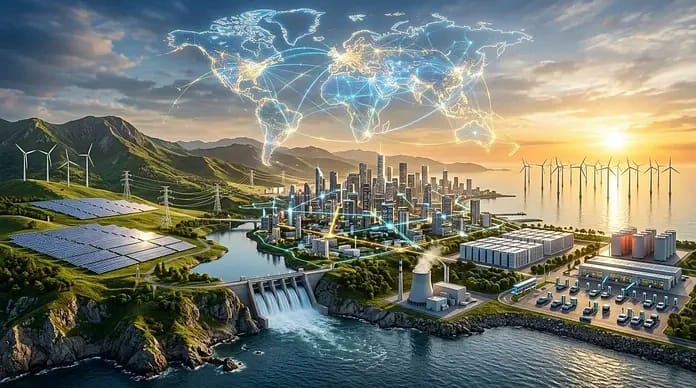
Global Energy Transition 2026: Progress and Bottlenecks
The global energy transition in 2026 has entered a new and more complicated phase.
Renewable power is expanding rapidly. Solar panels, wind farms, battery systems, electric vehicles, and modern power grids are attracting enormous investment. In many regions, clean technologies are no longer supported only because of climate goals. They are increasingly viewed as tools for lowering costs, improving energy security and reducing dependence on imported fuels.
But the transition is not moving in a straight line.
The disruption of oil and liquefied-natural-gas supplies through the Strait of Hormuz has encouraged governments in Europe and Asia to accelerate renewable energy. At the same time, several countries have temporarily increased coal use to keep electricity available during the crisis.
This apparent contradiction explains the energy system in 2026.
Clean energy is growing, but fossil fuels remain deeply embedded in transport, industry, heating, chemicals and electricity generation. Countries must meet rising power demand today while simultaneously rebuilding infrastructure for the future.
The International Energy Agency’s 2026 investment assessment expects worldwide energy investment to reach a record $3.4 trillion. Around $2.2 trillion is expected to flow into renewable energy, nuclear power, grids, storage, low-emissions fuels, efficiency and electrification. Approximately $1.2 trillion is still likely to support oil, gas and coal.
This means the global energy transition 2026 is real, but it is also incomplete.
The biggest challenge is no longer simply building more solar panels and wind turbines. Countries must connect new generation to power grids, store electricity, secure critical minerals, manage changing demand and keep energy affordable throughout the process.
Here are seven powerful shifts determining whether the transition succeeds.
Quick Takeaways
- Global energy investment could reach a record $3.4 trillion in 2026.
- Around $2.2 trillion is expected to support lower-emission energy and electrification.
- Renewable generation is expanding rapidly, with solar remaining a major driver.
- More than 2,500 gigawatts of generation, storage and large electricity-demand projects are waiting in grid connection queues.
- Battery storage is becoming essential for balancing variable renewable power.
- Energy security is accelerating renewable investment while also supporting short-term fossil-fuel use.
- The transition’s success will depend on grids, affordability, minerals and political execution—not generation capacity alone.
1. Energy Security Is Accelerating the Transition
Climate change remains an important reason for expanding clean energy, but energy security has become an equally powerful motivation.
Countries dependent on imported oil and gas remain vulnerable to wars, sanctions, shipping disruptions and sudden price increases. A crisis affecting one major energy route can increase costs across transport, manufacturing, food and household electricity.
The latest disruption around the Strait of Hormuz provides a clear example.
Countries in Europe and Asia have responded by conserving fuel, finding alternative supplies and accelerating domestic renewable-energy projects. Solar and wind cannot instantly replace all imported fossil fuels, but they can reduce long-term exposure to volatile international markets.
Once a solar or wind facility is operating, it does not require continuous shipments of fuel from another country.
This gives renewable power a strategic advantage.
Governments increasingly treat energy infrastructure in the same way they treat semiconductors, food supplies, communications systems and defense production. Reliable energy is essential to economic security.
However, security concerns can also delay decarbonization.
When natural-gas supplies become restricted, governments may reopen coal plants, extend existing facilities or purchase expensive liquefied natural gas. These decisions can increase emissions even while renewable investment rises.
The tension is visible in our examination of oil prices above $90. High fossil-fuel prices make alternatives more attractive, but they also create immediate inflation and reliability problems.
The global energy transition 2026 is therefore being driven by both climate ambition and fear of energy dependence.
2. Renewable Power Is Becoming the Largest Source of New Capacity
Renewables now dominate new electricity-generation additions in many markets.
Solar power has expanded particularly quickly because projects can be developed at different scales. A utility can build a vast solar farm, a business can install panels above a warehouse, and a household can add a rooftop system.
Wind remains another major source of low-emission electricity, although project approvals, transmission constraints and higher financing costs have slowed development in some markets.
The International Renewable Energy Agency’s 2026 statistics document the continued expansion of renewable capacity and generation around the world.
Cost is a major reason.
In regions with strong resources, new solar and wind can provide electricity at competitive prices. Renewable projects can also protect consumers from some fuel-price volatility because their operating costs are not tied directly to oil, coal or natural-gas markets.
But low generation cost does not automatically mean low total system cost.
A country still needs transmission lines, substations, storage, backup capacity and flexible demand. Those expenses become more important as wind and solar provide a larger share of electricity.
Renewables also depend on physical supply chains.
Solar panels, wind turbines, power electronics, batteries and cables require minerals, factories and transportation networks. Concentrated production can create new dependencies even as countries reduce reliance on fossil fuels.
This is why the current critical minerals race has become inseparable from energy policy.
The transition replaces some fuel dependencies with greater demand for materials and manufacturing capability.
3. Power Grids Have Become the Biggest Bottleneck
The most alarming obstacle in the global energy transition 2026 may be the electricity grid.
A renewable project cannot help consumers if it cannot connect to the network.
The IEA’s Electricity 2026 grid assessment reports that more than 2,500 gigawatts of renewable generation, storage, large electricity loads and other projects are stalled in connection queues worldwide.
For comparison, this represents an enormous amount of potential capacity waiting for transmission infrastructure, approval or system upgrades.
Grid construction is slow for several reasons:
- Permitting can take years.
- Transmission lines may cross several jurisdictions.
- Communities can oppose new routes.
- Transformers and specialized cables face long delivery times.
- Utilities must determine who pays for upgrades.
- Skilled engineering and construction workers are limited.
- Regulatory systems were designed for slower demand growth.
This creates a mismatch.
A solar farm or data center may be developed relatively quickly. The network needed to connect it can take much longer.
Congestion also causes curtailment. This happens when renewable facilities could generate electricity but are instructed to reduce output because the grid cannot safely carry the power.
The result is wasted clean electricity and lower project revenue.
The problem has become especially visible through the AI power-grid crisis. Data centers are seeking huge amounts of reliable power in regions where transmission systems already struggle to connect renewable projects and conventional demand.
The energy transition will not be won only in solar-panel and battery factories.
It will be won through transformers, substations, cables and transmission corridors.
4. Battery Storage Is Changing the Economics of Renewable Energy
Wind and solar generation vary with weather and time of day.
Solar output falls after sunset. Wind production can change rapidly. Electricity demand does not always match the hours when renewable generation is strongest.
Battery storage helps solve this problem.
A grid-scale battery can absorb electricity when supply is abundant and release it when demand rises or generation falls. It can also respond quickly to changes in grid frequency, reduce congestion and provide emergency support.
Battery costs have declined while manufacturing capacity and energy density have improved. Larger projects are now being developed alongside renewable generation.
The IEA’s State of Energy Innovation 2026 notes that storage accounts for a rising share of energy-related patenting, suggesting continued innovation across the sector.
Storage does not eliminate every reliability challenge.
Most common battery systems are designed to shift electricity across several hours. A power system may still face extended periods of low wind and solar output, seasonal demand changes or severe weather lasting several days.
Long-duration storage, hydropower, nuclear energy, flexible natural-gas generation, interregional transmission and demand response may all play roles depending on the country.
The important change is that renewable power and storage are increasingly planned together.
The question is moving from “Can solar generate cheap electricity?” to “Can solar, storage and grid flexibility provide dependable electricity when it is needed?”
That shift brings the transition closer to becoming a complete power-system strategy.
5. Electricity Demand Is Growing Faster Than Many Grids Expected
The energy transition does not involve replacing today’s electricity generation alone.
It also involves electrifying activities currently powered directly by fossil fuels.
Electric vehicles shift transport demand from petrol and diesel to the power grid. Heat pumps move some building heating from gas or oil toward electricity. Industrial processes may use electric furnaces, hydrogen or other electricity-dependent technologies.
Artificial intelligence adds another source of demand.
Data centers require electricity for processors, cooling, networking and backup systems. Some proposed AI campuses seek power on a scale previously associated with major industrial facilities or cities.
Our coverage of the AI energy boom explains why rising technology demand could affect electricity infrastructure even for households that rarely use AI services.
This creates both an opportunity and a risk.
Growing demand can support investment in new generation, storage and grids. Utilities may have stronger reasons to modernize infrastructure, while large customers can sign long-term contracts supporting renewable projects.
But demand can grow faster than supply.
If generation and grids cannot keep pace, electricity prices may rise, connection delays may worsen and governments may approve additional fossil-fuel capacity.
Energy efficiency is therefore as important as producing more power.
More efficient buildings, vehicles, appliances, data centers and industrial equipment can reduce the amount of new infrastructure required.
The cheapest unit of electricity is often the one that does not need to be generated.
6. Critical Minerals Are Creating New Energy-Security Risks
A clean-energy system requires fewer continuous fuel shipments, but it needs large quantities of materials during construction.
Copper is needed for grids, motors and electrical equipment. Lithium, nickel and graphite are important for many batteries. Rare earth elements are used in certain wind turbines and electric motors.
Demand is rising as countries expand electrification.
The challenge is not only where minerals are mined.
Processing and refining capacity can be even more concentrated than extraction. A country may possess reserves but lack the facilities needed to convert raw material into battery-grade or technology-ready products.
Building new mines and processing plants can take years. Projects face environmental assessments, community opposition, financing challenges and volatile commodity prices.
Diversification is necessary, but it must be managed responsibly.
Poorly designed extraction can damage water supplies, ecosystems and local communities. Ignoring those impacts can delay projects and weaken public support for the transition.
Recycling can reduce some pressure.
Batteries, motors and electronic equipment contain valuable materials that can be recovered. However, recycling will not immediately satisfy all demand because much of the equipment being installed today will remain in use for years.
Governments and companies need a combination of:
- Diverse mining locations
- More processing capacity
- Material-efficient technologies
- Recycling systems
- Strategic inventories
- Transparent supply chains
- Alternative battery chemistries
The broader transformation of global trade and supply chains in 2026 shows why energy infrastructure cannot be separated from manufacturing strategy.
7. Affordability Will Determine Public Support
An energy transition can be technologically possible and still fail politically if people believe it is making daily life unaffordable.
Households care about electricity bills, transport costs and reliable heating. Businesses care about competitive power prices and uninterrupted supply.
Governments must therefore balance three goals:
- Reduce emissions
- Maintain reliability
- Keep energy affordable
These goals can support each other over time but conflict during the transition.
Rapid renewable additions can lower exposure to expensive imported fuels. Yet grid upgrades, storage and backup systems require investment. Poorly designed market rules can also leave consumers paying for both old and new infrastructure.
Financing costs matter.
Renewable-energy projects often require substantial upfront capital, even when operating expenses are low. High interest rates can therefore increase electricity costs and delay investment.
Developing economies face an especially difficult challenge. Many have growing populations, rising electricity demand and limited access to affordable capital. They need more energy—not merely a cleaner version of current supply.
The transition cannot succeed globally if reliable electricity remains unavailable or unaffordable for large populations.
Policies should protect vulnerable households without removing incentives for efficiency. Governments also need transparent explanations of who pays for grid investments and how benefits will be distributed.
A just transition must consider workers and communities connected to coal, oil and gas. Training, regional investment and economic diversification should begin before facilities close.
Public support is not a secondary issue.
It is essential infrastructure.
Why Fossil Fuels Are Not Disappearing Immediately
Renewable power can expand rapidly while fossil-fuel consumption remains significant.
Oil is deeply connected to aviation, shipping, heavy transport and petrochemicals. Natural gas supports electricity, heating and industrial processes. Coal remains important in several large Asian economies.
Replacing these uses requires different technologies and timelines.
Electric cars can reduce oil demand in road transport, but they do not solve aviation. Renewable electricity can displace coal generation, but industrial heat may require electrification, hydrogen or redesigned production processes.
Energy systems also need reliability during unexpected shortages and extreme weather.
The realistic transition is therefore a process of replacing specific fossil-fuel uses where practical while developing solutions for harder sectors.
The danger is using this complexity as an excuse for permanent inaction.
Short-term backup capacity can become long-term dependence if governments continue building infrastructure without a credible transition plan.
What Governments and Businesses Should Prioritize
Build grids before connection queues become unmanageable
Transmission planning should anticipate future renewable generation, industrial electrification and data-center demand rather than respond after projects are waiting.
Pair renewable projects with flexibility
Storage, demand response, interconnections and flexible generation should be planned alongside new capacity.
Diversify critical-material supply chains
Countries should avoid replacing dependence on imported fossil fuels with excessive reliance on one mineral processor or equipment supplier.
Make permitting faster and clearer
Projects need predictable timelines without abandoning environmental and community protections.
Protect affordability
Energy policy should consider household bills, industrial competitiveness and access to reliable electricity.
Invest in efficiency
Efficient buildings, factories, appliances and data centers reduce the cost of every other part of the transition.
Prepare workers and communities
Training and regional investment should begin before economic disruption occurs.
FAQs
What is the global energy transition 2026?
It is the ongoing shift from fossil-fuel-dominated energy systems toward renewable power, nuclear energy, storage, electrification, efficiency and other lower-emission technologies.
Is renewable energy growing faster than fossil fuels?
Renewables dominate new power-capacity additions in many markets, but fossil fuels remain important in the total energy system.
What is the biggest obstacle to renewable energy?
Grid connections, transmission capacity, storage, permitting, critical minerals and financing are among the largest obstacles.
Why is battery storage important?
Storage moves electricity from periods of high renewable output to times of greater demand and helps stabilize power systems.
Will oil and gas disappear soon?
No. They remain important in transport, industry and heating. Their role can decline over time as practical alternatives expand.
Can the energy transition lower prices?
Renewables can reduce fuel-price exposure, but grids, storage and financing also cost money. Good planning determines whether consumers receive the benefits.
The Light Span Perspective
The most important lesson from the global energy transition 2026 is that clean-energy generation is advancing faster than the infrastructure around it.
The world can manufacture and install enormous quantities of solar panels, wind turbines and batteries.
But electricity must still reach consumers at the correct time, location and price.
That makes grids, storage, minerals, financing and public trust just as important as generation technology.
The transition is no longer a distant environmental promise. It is an active industrial and geopolitical transformation involving trillions of dollars.
It will create new industries, jobs and investment opportunities. It will also produce new dependencies, bottlenecks and political disputes.
Success should not be measured only by how much renewable capacity is announced.
It should be measured by whether power systems become cleaner, more reliable, more affordable and less vulnerable.
The global energy transition is accelerating.
Now the infrastructure must catch up.
Continue reading more

