


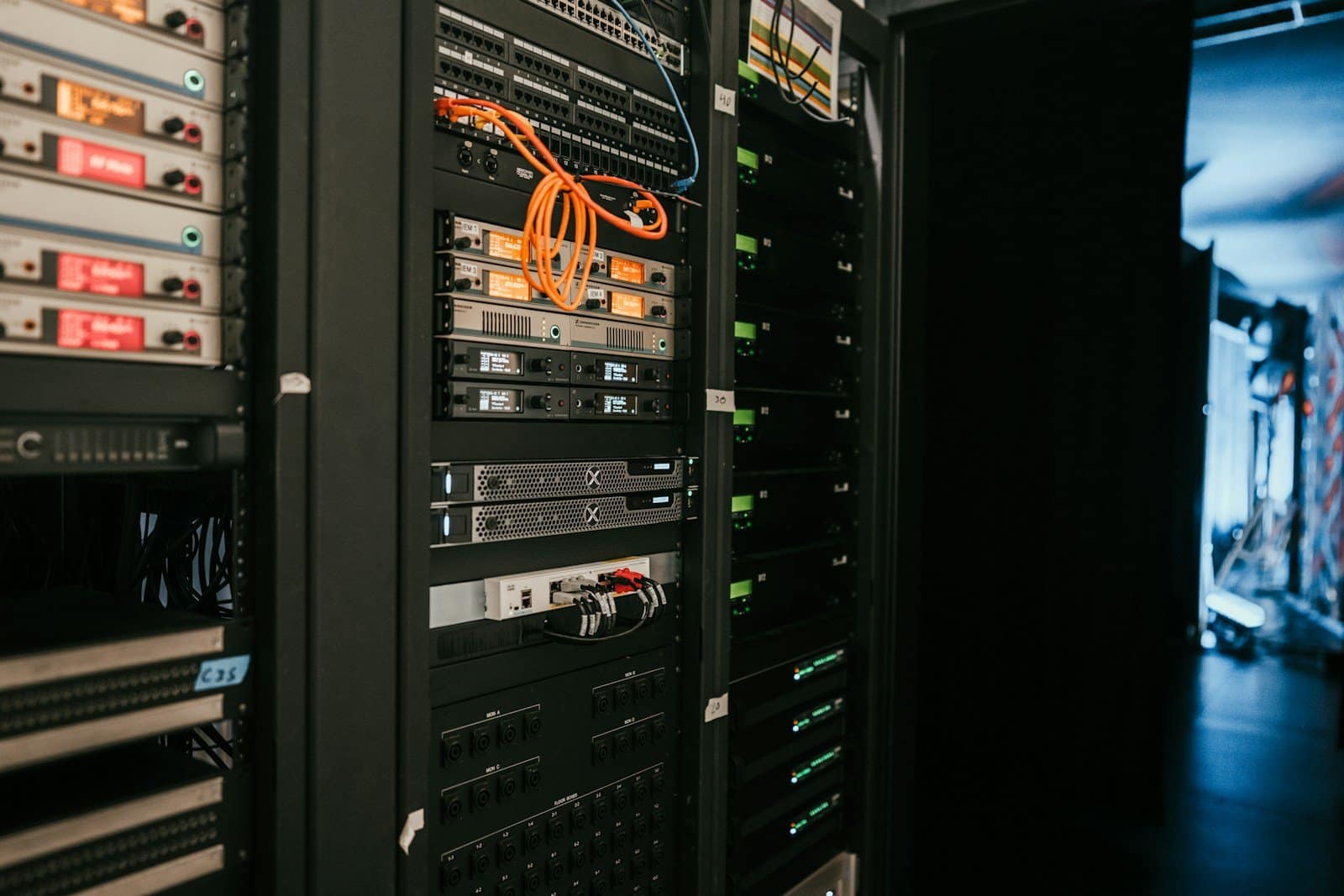
Artificial intelligence is often described as a software revolution, but one of its biggest constraints is physical: electricity. Training and running increasingly capable AI systems requires large computing clusters, and those clusters need data centers with substantial power, cooling and grid connections.
That relationship is becoming harder to ignore in 2026. The International Energy Agency says global electricity demand is expected to grow by an average 3.6% a year from 2026 through 2030, with data centers among the structural drivers. In the United States, the IEA expects data centers to account for around half of electricity-demand growth through 2030. IEA Electricity 2026
This does not mean AI is the only reason power systems are under pressure. Electric vehicles, air conditioning, industrial electrification and manufacturing are also increasing demand. But AI data centers are unusual because they can arrive as very large, concentrated loads in locations where transmission and generation capacity may already be constrained.
Why AI Data Centers Need So Much Power
Modern AI workloads rely heavily on accelerated computing. Instead of relying mainly on conventional CPUs, AI infrastructure uses large numbers of GPUs and other specialized accelerators. A single facility can therefore contain thousands of high-performance processors operating together.
The electricity bill is not limited to the chips. Servers need networking equipment, storage, power-conversion systems and cooling. The IEA notes that data-center electricity consumption includes IT equipment, cooling, UPS systems, networking and other infrastructure. As computing becomes denser, keeping equipment within safe operating temperatures becomes an increasingly important part of the energy equation.
AI also changes the shape of demand. Traditional data-center workloads may fluctuate, but large AI clusters can create substantial and relatively continuous electrical loads. That makes the availability of firm power and suitable grid connections particularly important when companies plan new facilities.
The Numbers Show Why the Issue Is Growing
The IEA’s Global Energy Review 2026 found that data-center electricity consumption increased around 17% in 2025. Globally, that increase was still smaller than the overall rise in electricity consumption because data centers remain only one part of a much larger electricity system. But their growth rate is significant, especially in regions where new facilities are concentrated.
In the United States, the picture is more striking. The IEA reports that data centers contributed around half of the country’s electricity-demand increase in 2025. Its five-year outlook similarly expects data centers to account for roughly half of US demand growth through 2030. IEA Global Energy Review 2026
These figures matter because electricity demand is not simply a matter of producing more power somewhere. The power must reach the right place at the right time. That requires generation, transmission, substations, distribution equipment and increasingly sophisticated grid management.
The Real Bottleneck May Be the Grid
Building a data center can be faster than expanding the infrastructure needed to serve it. A developer may have land, financing and equipment while still waiting for a transmission connection or additional generation.
This is why grid capacity is becoming a strategic factor in the AI race. The US Department of Energy has identified the rapid growth of hyperscale AI data centers as one reason the country’s transmission system needs additional capacity. Its National Transmission Needs Study says the legacy grid must accommodate load growth from AI data centers alongside manufacturing and broader electrification. US Department of Energy: National Transmission Needs Study
The problem is not necessarily a shortage of electricity in the abstract. It can be a shortage of electricity where and when the new load wants to connect. Transmission projects can require years of planning, permitting and construction, while large AI projects are often being developed on much faster commercial timelines.
Why Some AI Projects Are Hitting Power Delays
Recent developments illustrate the problem. In September 2026, Reuters reported that Oracle issued a force majeure notice related to potential power delays at a major New Mexico data-center project. The project is connected to the wider Stargate infrastructure effort, showing how power and infrastructure constraints can affect even very large AI expansion plans. Reuters: Oracle and data-center power delays
That does not mean the AI buildout is stopping. It shows something more practical: securing computing capacity increasingly involves securing physical infrastructure. Land, chips, financing, cooling systems and electricity connections all have to arrive together.
AI Is Also Changing How the Grid Can Be Managed
There is an important second side to the story. AI does not only increase electricity demand. It can also help power systems use existing infrastructure more efficiently.
In its September 2026 report Modernising Grids in the Age of Electricity, the IEA examined how digital technologies and AI can support forecasting, optimization, situational awareness, resilience and risk management. The report argues that better digital tools can help networks extract more value from existing grid capacity while new infrastructure is being developed. IEA: Modernising Grids in the Age of Electricity
This creates an interesting feedback loop. AI increases demand for electricity, but AI-based forecasting and optimization may help utilities manage increasingly complex systems. The technology therefore has both a load effect and a potential efficiency effect.
The Energy Mix Matters Too
Adding generation capacity does not automatically solve the problem. The type, location and reliability of that generation matter.
Renewables are expanding rapidly, and the IEA’s Global Energy Review 2026 found that solar PV was the largest single source of growth in global energy supply in 2025. At the same time, solar and wind output varies with weather, which means grids need storage, transmission, flexible demand, backup generation and other tools to maintain reliability.
AI data centers create an additional challenge because operators generally need high reliability. A computing cluster that goes offline can interrupt workloads, delay training runs or disrupt services. This increases the value of reliable grid connections and on-site backup systems.
Why Data Center Location Is Becoming a Strategic Decision
For years, companies often thought about data-center locations mainly in terms of network connectivity, land, taxes, labor and proximity to customers. Power availability is now becoming an equally important consideration for AI infrastructure.
A region with abundant land but limited transmission capacity may not be suitable for a huge AI campus. Another location with strong generation and grid connections may be more attractive even if construction or operating costs are higher.
This is already influencing how utilities and grid operators plan. In the United States, PJM Interconnection began its 2026 review of proposed large-load adjustments to its 2027 long-term load forecast, with updated methods intended to better evaluate whether proposed large energy projects are likely to become operational. Reuters: PJM large-load review
What This Means for AI Companies
For AI companies, electricity is becoming part of infrastructure strategy rather than a background utility expense. Companies need to think about power contracts, grid interconnection, facility design, cooling efficiency, hardware utilization and geographic diversification.
This could also favor companies that can improve the amount of useful computation produced per unit of electricity. More efficient accelerators, better model architectures, improved cooling and smarter scheduling can reduce the power required for a given amount of work.
Efficiency does not automatically reduce total electricity consumption. If lower computing costs make AI services cheaper and encourage much greater usage, total demand can still rise. This is a classic rebound effect and is one reason infrastructure forecasts have to consider both efficiency improvements and demand growth.
What This Means for Businesses Using AI
Most businesses will not operate a hyperscale data center, but they can still be affected by the infrastructure race. Cloud providers may adjust pricing, capacity availability and regional offerings as they expand AI infrastructure.
For businesses deploying AI at scale, infrastructure choices can become more important. Running every workload on the largest available model may be unnecessary. Smaller models, caching, batching and workload-specific inference can sometimes deliver similar business value with less computation.
This is also where AI governance connects with infrastructure planning. Companies should measure not only model accuracy and cost per request but also latency, compute intensity and the operational dependency created by a particular provider or region.
Could AI Push Up Electricity Prices?
The answer depends heavily on location, market design and how new generation and grid infrastructure are financed. Rapid load growth can create pressure for new investment, but the effect on consumers is not uniform.
Large industrial customers can sometimes sign dedicated power agreements or fund infrastructure directly. In other cases, utilities recover infrastructure costs through regulated rates. The distribution of those costs is therefore an important policy and market question rather than a simple consequence of AI alone.
What is becoming clearer is that data-center growth is forcing utilities, regulators and communities to examine who pays for new capacity and how quickly that capacity can be built. The IEA has also emphasized the need to integrate data centers securely into power systems while improving measurement of AI’s energy and resource requirements.
The Hidden Challenge: Water, Cooling and Local Infrastructure
Electricity is not the only physical constraint. Large computing facilities also require cooling infrastructure, and some cooling designs rely on water. That makes location important for another reason: a region may have sufficient electricity but face water stress or other infrastructure limitations.
The Light Span previously examined AI data-center water use. The power and water questions should be considered together because both are part of the physical footprint of expanding AI capacity.
What Happens Next?
The next phase of the AI infrastructure race is likely to be shaped by a combination of computing efficiency, grid expansion, generation investment and smarter energy management.
More efficient chips can reduce the electricity needed for individual workloads. Better software can improve utilization. Advanced cooling can reduce facility overhead. Storage and flexible demand can help grids handle changing conditions. New transmission can connect large loads and generation more effectively.
But none of these solutions works instantly. Transmission lines, substations, generation facilities and data centers all require planning and construction. This creates a potential mismatch between the speed of AI investment and the speed of physical infrastructure development.
A Practical Checklist for Businesses
- Measure AI workloads by compute, cost and operational dependency.
- Choose models based on the task rather than defaulting to the largest model.
- Use batching, caching and smaller models where they meet the required quality.
- Consider regional cloud capacity and resilience before scaling critical AI workloads.
- Ask providers about infrastructure availability and service-level commitments.
- Track how AI expansion affects electricity, cooling and other physical resources.
- Build contingency plans for capacity constraints or regional outages.
Frequently Asked Questions
How much electricity do AI data centers use?
Usage varies significantly by facility, workload and equipment. The IEA reports that overall data-center electricity consumption grew around 17% in 2025, while AI-focused data-center demand grew faster. The important trend is the rapid rate of expansion rather than one universal consumption figure.
Why can’t the grid simply produce more electricity?
Generation is only one part of the system. New large loads may require transmission lines, substations and other grid upgrades, and those projects can take years to plan and build.
Will AI make electricity more expensive?
There is no single global outcome. Effects depend on the local power market, new generation, grid investment, financing arrangements and how infrastructure costs are allocated.
Can AI help solve the power-grid problem it is contributing to?
Potentially. AI and other digital tools can improve forecasting, optimization, monitoring and grid management. The IEA identifies these as important applications for modernizing electricity networks.
What can companies do to reduce AI infrastructure demand?
They can use efficient models, improve workload scheduling, reduce unnecessary inference, reuse results through caching and select infrastructure based on the actual requirements of each workload.
Light Span Perspective
The AI boom is increasingly becoming a story about physical infrastructure. Chips matter. Models matter. Capital matters. But without electricity, cooling and grid capacity, none of those investments can turn into useful computing.
The important question is therefore not whether AI will use more electricity. The data already shows that demand from data centers is rising rapidly. The bigger question is whether power systems can expand and modernize quickly enough while keeping reliability, affordability and resource constraints in view.
For the AI industry, this means the next competitive advantage may come from infrastructure efficiency as much as raw computing power. For businesses, it means AI strategy increasingly needs to account for the physical systems underneath the software.
Further reading: AI Data Center Water Use · Microsoft AI Code of Conduct · Akamai Anthropic Deal · AI Model Collapse

