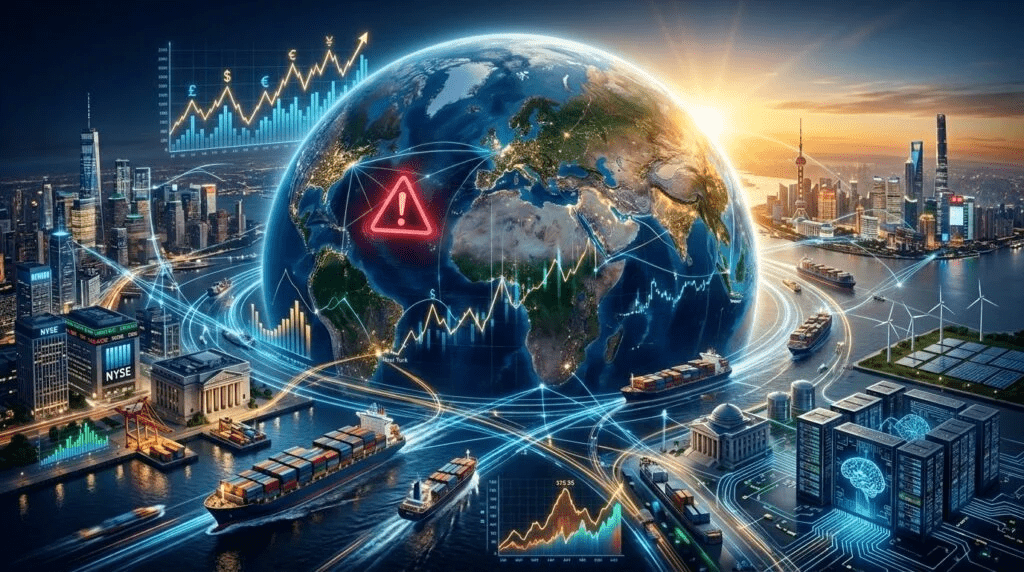



World Economy Warning Signs: Risks for Growth and Households
Watch the full documentary from The Light Span on YouTube before reading the complete analysis below.
For much of the past decade, the global economy has demonstrated remarkable resilience. It has weathered a pandemic, supply chain disruptions, inflationary pressures, and geopolitical conflicts that reshaped international trade.
Yet despite this resilience, economists and policymakers are increasingly warning that the world has entered a period of heightened uncertainty.
Economic growth is slowing in many regions, governments are carrying record levels of debt, businesses are adapting to rapidly changing technologies, and geopolitical tensions continue to challenge global stability.
None of these issues alone guarantee an economic crisis. However, together they represent one of the most complex economic environments in recent history.
Why Experts Are Paying Attention
Several indicators are prompting closer scrutiny of the global economy.
These include:
- Slower GDP growth in several major economies
- Persistent inflation in some regions
- High government borrowing
- Elevated interest rates
- Geopolitical instability
- Supply chain restructuring
- Growing energy demand
- Financial market volatility
While many economies continue to expand, the pace of growth has become increasingly uneven.
Debt Levels Continue to Rise
Governments around the world significantly increased spending during recent years to support businesses, healthcare systems, and households.
While these measures helped stabilize economies, they also contributed to historically high public debt levels.
Higher debt can limit future policy flexibility, especially if borrowing costs remain elevated.
Countries now face the challenge of supporting economic growth while maintaining sustainable public finances.
Inflation Is Improving—but Challenges Remain
Inflation has eased compared with previous highs in many countries.
However, several risks remain:
- Energy price fluctuations
- Labor shortages
- Housing costs
- Food prices
- Supply disruptions
Central banks continue monitoring inflation carefully, balancing the need to support growth without allowing prices to rise too quickly.
Artificial Intelligence Is Reshaping the Economy
Artificial intelligence is becoming one of the biggest economic transformations of the century.
Businesses are adopting AI to:
- Improve productivity
- Reduce operational costs
- Automate repetitive tasks
- Accelerate research
- Enhance customer experiences
At the same time, rapid technological change raises important questions about workforce adaptation, regulation, and long-term competitiveness.
Global Trade Is Entering a New Phase
International trade continues to evolve.
Instead of relying on a small number of manufacturing hubs, companies are increasingly:
- Diversifying suppliers
- Expanding regional production
- Investing in automation
- Strengthening logistics networks
These changes aim to improve resilience while reducing exposure to geopolitical and supply chain risks.
Markets Are Watching Central Banks Closely
Interest rate decisions remain one of the biggest influences on global financial markets.
Investors are paying close attention to:
- Inflation data
- Employment figures
- Consumer spending
- Manufacturing activity
- Central bank guidance
Even small policy changes can affect stock markets, bond yields, currencies, and business investment.
Energy Security Is Becoming an Economic Priority
Reliable and affordable energy remains essential for long-term economic growth.
Countries continue investing in:
- Renewable energy
- Nuclear power
- Electricity infrastructure
- Battery storage
- LNG projects
- Smart energy grids
The growing electricity needs of AI data centers and digital infrastructure are making energy policy more important than ever.
Geopolitics and Economics Are More Connected Than Ever
Trade, investment, and diplomacy increasingly influence one another.
Businesses now consider geopolitical risks when making decisions about manufacturing, sourcing, and expansion.
This shift has accelerated trends such as nearshoring, friendshoring, and regional supply chain development.
What It Means for Businesses
Businesses that remain adaptable are likely to be better positioned.
Key priorities include:
- Diversifying supply chains
- Investing in technology
- Managing financial risk
- Improving operational efficiency
- Monitoring global developments
- Building resilient business models
Organizations that prepare for uncertainty rather than reacting to it often perform better over the long term.
What It Means for Individuals
Economic uncertainty affects more than financial markets.
It can influence:
- Employment opportunities
- Borrowing costs
- Household budgets
- Investment returns
- Housing affordability
- Consumer confidence
Understanding these broader economic trends can help individuals make more informed financial decisions.
Looking Ahead
The global economy is entering a period defined by transformation rather than crisis.
Artificial intelligence, clean energy, changing trade patterns, demographic shifts, and geopolitical developments are all reshaping how economies grow and compete.
While challenges remain significant, they also create opportunities for innovation, investment, and long-term resilience.
Conclusion
The warning facing the global economy is not about one single event—it is about the convergence of multiple powerful trends occurring at the same time.
Businesses, governments, investors, and consumers will all need to adapt to a world that is becoming more interconnected, technologically advanced, and economically complex.
Those who understand these shifts today will be better prepared for the opportunities and challenges of tomorrow.
For a deeper visual analysis, watch our full documentary on The Light Span YouTube Channel.
The Light Span — Illuminating the Forces Shaping Our World.