


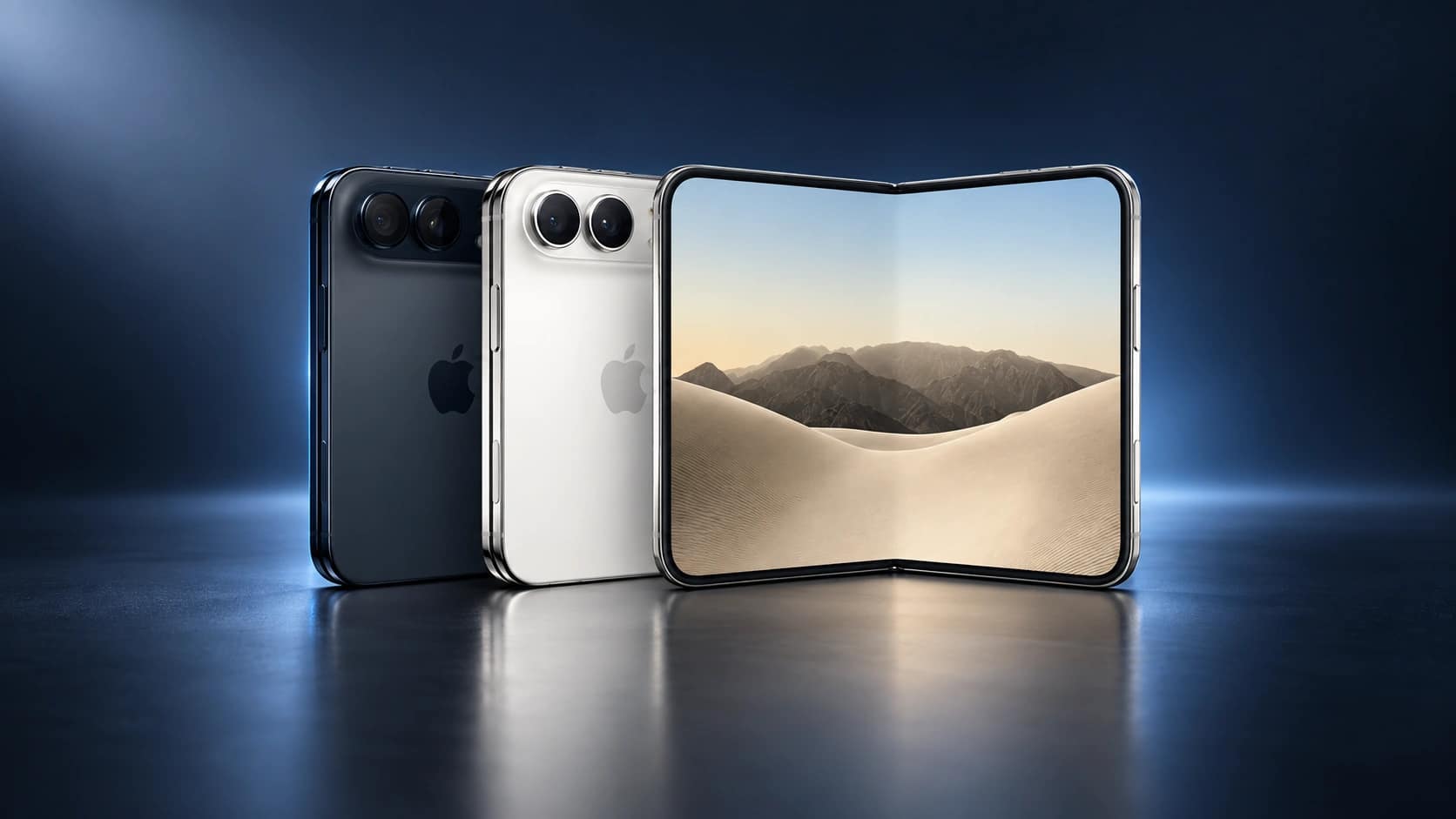
iPhone Duo is Apple’s first foldable smartphone and its biggest change to the iPhone’s physical design in years. Announced on September 9, 2026, the book-style device combines a compact outer screen with a tablet-like display that opens from the middle. Preorders begin October 16, followed by general availability on October 23.
The starting price is $1,999 for 256GB, placing it firmly in ultra-premium territory. That price makes the central question more important than the novelty: does the iPhone Duo create enough practical value to justify carrying a thicker, more complicated and considerably more expensive phone?
Apple is not the first company to make a foldable. Its advantage is arriving after competitors have spent years exposing the category’s weaknesses: visible creases, fragile inner screens, awkward software, poor cameras and uncertain long-term durability. The iPhone Duo is Apple’s attempt to solve those problems through coordinated hardware and software rather than simply adding a hinge to a conventional iPhone.
iPhone Duo Release Date and Price
Apple says the iPhone Duo will be available for preorder at 5:00 a.m. Pacific Time on October 16 and will reach customers and stores on October 23. The base configuration includes 256GB of storage and costs $1,999. Higher-capacity versions extend to 2TB, with the top configuration reaching $3,199.
That range pushes the device beyond ordinary flagship pricing and into laptop territory. It is not designed as the default iPhone for most buyers. Apple is positioning it as a new premium category for people who value a larger mobile canvas, multitasking and early access to the company’s foldable platform.
The timing also makes this a defining product for Apple’s new leadership. The site’s analysis of John Ternus becoming Apple’s new CEO explains why the launch carries strategic weight. The iPhone Duo is not merely another annual specification upgrade; it is an early test of whether Apple can create a new growth chapter around hardware design.
1. Two Displays Create Two Different Kinds of Phone
The first major feature is the dual-display system. Closed, the device has a 5.4-inch outer display and a compact, passport-like shape. Open it and the user gets a 7.6-inch Super Retina XDR inner display—the largest screen Apple has placed on an iPhone.
Both screens share the same aspect ratio, which should make transitions feel more predictable when an app moves between them. Apple says the inner screen is 50 percent larger than the iPhone 18 Pro Max display. The outer display offers more than 90 percent of the screen area of the iPhone 18 Pro despite the folded device’s compact shape.
According to Apple’s official iPhone Duo overview, both displays support ProMotion, always-on functionality and peak brightness of up to 3,000 nits. Those specifications should help the screens remain fluid and readable outdoors, although battery life can vary substantially with brightness, refresh rate and multitasking.
The real benefit is flexibility. Closed, the Duo behaves like a small phone for messages, calls and quick tasks. Open, it becomes a wider workspace for documents, video, browsing and side-by-side apps. Whether this feels transformational will depend less on display measurements than on how often users genuinely need the inner screen.
2. Apple Is Trying to Make the Fold Feel Invisible
A visible crease has been one of the most persistent complaints about foldable phones. Apple uses a multilayer inner display with a custom nano-texture finish designed to reduce glare and make the center fold less noticeable. Internal adhesives allow the display layers to shift as the phone opens and closes, reducing stress around the hinge area.
Apple describes the inner surface as perceptually flat rather than literally claiming that physics has disappeared. That wording matters. A flexible display still bends repeatedly, and long-term durability cannot be proven during a launch presentation. Independent testing after months of use will be more meaningful than carefully controlled demonstrations.
The inner display also uses an under-display FaceTime camera so the viewing area is not interrupted by a visible cutout. Image quality from cameras beneath a screen can be weaker than from conventional front cameras because light must pass through display layers. Buyers should wait for real samples before assuming the hidden design produces the same results as Apple’s standard selfie cameras.
3. The Titanium Hinge Is the Most Important Component
The hinge determines whether a foldable remains useful after thousands of opening cycles. The iPhone Duo uses a Grade 5 titanium frame and hinge cover, reinforced internally with ceramic fibers. Apple says the phone can hold several positions rather than operating only fully open or fully closed.
Those intermediate positions create new uses. The device can rest partially folded for watching video, joining calls, taking timed photos or displaying controls on one half while content appears on the other. In a standing position, the outer display can show a clock, widgets or media without a separate stand.
Apple also lists IP68 dust and water resistance. That is notable because hinges and moving display layers make sealing more difficult. Still, an IP rating does not make a phone indestructible. The flexible inner screen is unlikely to tolerate sharp objects or concentrated pressure as well as conventional cover glass, and hinge repairs may be expensive.
The device measures about 5.2mm when open and 11.3mm when closed. The unfolded design is thin, but folded thickness affects pockets and one-handed use. Buyers should judge the Duo as both a slim tablet and a relatively thick phone.
4. iOS 27 Must Prove the Larger Screen Is Useful
Foldable hardware succeeds only when software knows what to do with the extra space. iOS 27 introduces layouts designed for changing orientations and fold positions. Apps can expand as the device opens, and Split View allows two applications to run side by side.
Apple has moved the home-screen dock and navigation controls to a vertical area along the right side when appropriate. Users can browse while keeping video visible, work with a wider keyboard or position different information on each side of the fold. The interface attempts to remain recognizably iPhone-like instead of becoming a miniature Mac.
The challenge is third-party support. Apple’s own applications can be optimized from launch, but the experience will depend on whether developers update their apps for the new dimensions and postures. Poorly adapted applications may stretch awkwardly, waste space or behave like enlarged phone windows.
The site’s look at future gadgets changing everyday technology makes the broader point: new form factors matter when they solve routine problems. The Duo needs workflows people miss when returning to a normal phone, not demonstrations that look clever for five minutes.
5. A20 Pro Brings Laptop-Class Ambition
The iPhone Duo uses Apple’s A20 Pro chip with a six-core CPU, seven-core GPU and a 32-core Neural Processing Unit built around two neural engines. Apple pairs it with its C2 modem and a large vapor chamber intended to spread heat during demanding work.
That cooling system is especially important in a folding body. The phone has two thin halves and less continuous internal space than a conventional device. Running games, video editing, AI features or two active apps can create sustained heat that reduces performance if it is not managed effectively.
Apple’s official iPhone Duo technical specifications provide the confirmed hardware details, but benchmark scores alone will not reveal the full experience. Reviewers need to test sustained performance, temperature and battery drain with the inner display active.
The larger screen could make on-device intelligence more useful by presenting source material, results and controls together. This connects with the privacy advantages of on-device AI: capable local hardware can perform more tasks without sending every input to a remote server.
6. The Camera System Is Powerful but Not the Best iPhone Camera
Apple gives the iPhone Duo two 48-megapixel rear cameras: a Fusion Main camera and a Fusion Ultra Wide. The main sensor supports optical-quality 2x framing, producing 0.5x, 1x and 2x shooting options across the system.
That is a versatile setup, but the Duo does not match the iPhone 18 Pro’s three-camera arrangement, dedicated telephoto hardware or variable-aperture main camera. This is a familiar foldable compromise: space used by the hinge, dual batteries and extra screen limits what manufacturers can devote to cameras.
The folding design adds new ways to shoot. The outer screen can preview portraits while the rear cameras capture them. Dual Capture can record different perspectives, while Apple’s Smart Take can recognize a pose and trigger a photo. The phone can also stand partially folded for stable group pictures without a tripod.
People paying $1,999 may reasonably expect Apple’s best camera. The Duo instead asks them to prioritize display versatility over the complete Pro camera system. Buyers whose first requirement is mobile photography may prefer the iPhone 18 Pro Max.
7. Battery Life Reveals the Foldable Tradeoff
The Duo has a dual-cell battery architecture that distributes power across both halves. Apple lists up to 31 hours of video playback on the inner screen and up to 44 hours when using the outer display. General mixed use is described as all-day, but independent testing will be essential.
Those figures illustrate how much the open screen changes power demand. A 7.6-inch high-refresh display requires more energy than the smaller outer panel. Multitasking, high brightness, gaming and cellular use will further affect runtime.
Apple says wired charging can reach 50 percent in around 20 minutes with suitable equipment. Wireless and 25W MagSafe charging can reach the halfway point in roughly 30 minutes under Apple’s stated conditions. The exact accessories included with the phone and charging behavior under heat should be checked before purchase.
Siri AI and Apple Intelligence on iPhone Duo
Apple is using the Duo to showcase Siri AI and Apple Intelligence. The large display can give an assistant more room to present actions, visual results and application context. On-device processing may also benefit from the A20 Pro’s neural hardware.
The meaningful question is not how many AI features appear in marketing. It is whether they reduce friction. Summarizing information beside the source, organizing material across two apps, editing images and coordinating tasks may fit the foldable screen naturally. Features that work identically on a regular iPhone provide less reason to pay the Duo premium.
Siri AI is rolling out first in English, so availability can vary by language, region and feature. Buyers should evaluate what works at purchase rather than relying on future promises.
iPhone Duo Versus Conventional iPhone
The Duo’s strongest advantage is screen area in a pocketable device. It is better suited to side-by-side work, reading, entertainment, gaming and visual multitasking. Its compact closed screen may also appeal to users who dislike increasingly tall flagship phones.
A conventional iPhone remains simpler, thinner when carried, less expensive and likely easier to repair. The iPhone 18 Pro offers a stronger camera system, while the Pro Max offers long battery life without a flexible display. The right choice depends on whether the inner screen changes daily behavior enough to offset cost and complexity.
Apple’s position among the world’s most valuable companies gives it unusual power to make developers support a new form factor. If millions of users adopt the Duo, optimized foldable layouts could become standard across the App Store. If sales remain small, software support may develop slowly.
Who Should Consider the iPhone Duo?
The device makes the most sense for professionals who review documents, communicate and multitask while traveling; creators who benefit from a larger preview; frequent readers and video viewers; and technology enthusiasts willing to accept first-generation risk.
It is less suitable for buyers focused on value, maximum camera capability, proven durability or light pocket weight. People who use their phone mainly for calls, messaging, social apps and quick photos may rarely open the inner screen enough to justify the price.
Anyone considering the Duo should handle it in person. Hinge feel, folded thickness, outer-screen width and the visibility of the crease are physical characteristics that specification sheets cannot communicate.
The Biggest Risks of Buying Apple’s First Foldable
The first risk is durability. Apple has engineered the display and hinge carefully, but the design remains mechanically more complex than a standard phone. The second is repair cost. A large flexible OLED, hinge and two-part chassis may make accidental damage expensive.
The third is immature software. Some applications may not use the screen properly at launch. The fourth is first-generation pricing: future versions could become thinner, lighter or less expensive. The fifth is opportunity cost. Spending up to $3,199 on a phone competes with buying a premium iPhone and a separate iPad or laptop.
What iPhone Duo Means for the Smartphone Market
Apple entering foldables gives the category legitimacy and competitive pressure. The shift follows a wider premium-device cycle that also includes Samsung’s Galaxy Watch 9. Samsung, Google, Huawei, Oppo and other manufacturers have already solved many early problems. Apple now brings a large developer ecosystem, retail network and ability to standardize interaction patterns.
Competitors may respond with lower prices, thinner designs, better cameras and longer software support. Component suppliers could benefit if foldable volumes rise, while application developers gain a stronger reason to create responsive mobile interfaces.
Light Span Perspective
The iPhone Duo is important because Apple has finally decided that foldable technology is mature enough to carry the iPhone name. Its strongest ideas are not the hinge itself but the integration around it: matched displays, adaptable iOS layouts, positional use, powerful local processing and a design intended to reduce the compromises that defined early foldables.
Yet the $1,999 starting price turns every compromise into a serious question. The camera system is not Apple’s most complete, the inner display’s long-term durability is unproven, battery life changes depending on which screen is used, and third-party software needs time to mature.
For early adopters who genuinely want a phone and small tablet in one device, the Duo may be Apple’s most exciting hardware in years. For most users, waiting for independent durability testing—or a refined second generation—will be the wiser decision.
Frequently Asked Questions
What is the iPhone Duo?
It is Apple’s first foldable iPhone. It uses a book-style design with a 5.4-inch outer display and a 7.6-inch inner display.
How much does iPhone Duo cost?
Apple’s U.S. pricing starts at $1,999 for 256GB. Storage options extend to 2TB, with the highest configuration priced at $3,199.
When will iPhone Duo be released?
Preorders begin October 16, 2026, and availability begins October 23, 2026.
Does iPhone Duo support Face ID?
No. Apple uses Touch ID in a side button. The device has conventional and under-display cameras for FaceTime and photography.
Is iPhone Duo waterproof?
Apple lists an IP68 water- and dust-resistance rating. Water resistance can decline with wear and does not mean the device is immune to liquid damage.
Should you buy the first iPhone Duo?
It suits early adopters who will use the larger display frequently and accept first-generation cost and durability uncertainty. Buyers prioritizing value, cameras or proven longevity should compare it carefully with conventional iPhones.

