


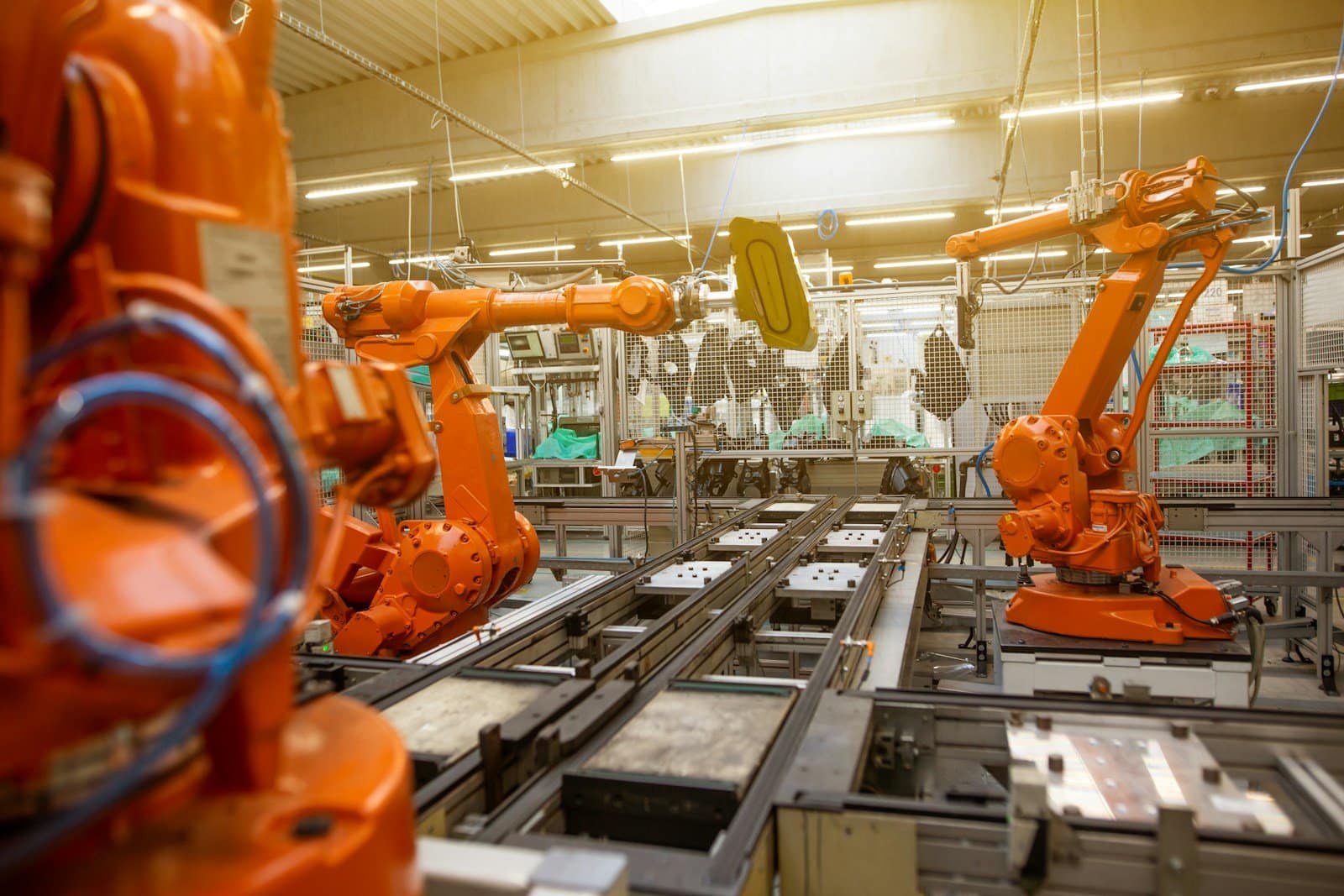
Manufacturing is showing a surprisingly strong rebound in late 2026, but the recovery is not spreading evenly across countries, industries or supply chains. September survey data showed global factory activity reaching its strongest level in more than four years, while official economic analysis points to a similar story: technology investment, stronger trade and renewed capital spending are supporting production, even as energy costs, supply bottlenecks and geopolitical uncertainty keep pressure on manufacturers.
That combination makes the global manufacturing recovery more complicated than a simple “factories are booming again” headline. Some producers are benefiting from demand for semiconductors, machinery, electronics, defence equipment and AI infrastructure. Others are still dealing with expensive energy, longer delivery times, weak domestic demand or uncertain trade conditions.
The important question is therefore not only whether manufacturing is recovering. It is what is driving the recovery, where the gains are concentrated, and how durable they may be.
What the latest manufacturing data show
S&P Global reported that its Global Manufacturing Purchasing Managers’ Index reached 53.0 in September 2026, the highest reading since February 2022. The survey also recorded the strongest global increase in factory production since July 2021 and a sharp improvement in new orders and export orders. Manufacturing employment rose at its fastest pace in more than four years.
These numbers matter because a PMI above 50 generally indicates expansion. More importantly, the September reading suggests that the improvement is broad enough to be visible across production, orders, trade and employment rather than being driven by one isolated indicator. S&P Global estimated that the production component was consistent with worldwide manufacturing output growing at an annualized rate of almost 4% in September. urlS&P Global’s September manufacturing PMI analysishttps://www.spglobal.com/market-intelligence/en/news-insights/research/2026/10/global-manufacturing-pmi-hits-highest-since-february-2022-but-price-growth-also-accelerates
However, the same survey contained an important warning. Input costs continued to rise, supplier delivery times lengthened and factory selling prices accelerated. In other words, manufacturers are receiving more orders, but some of the extra demand is colliding with constrained supply.
Why the global manufacturing recovery is happening now
Several forces are reinforcing each other.
1. AI investment is creating a new wave of industrial demand
Artificial intelligence is increasingly a manufacturing story rather than only a software story. Data centres require servers, advanced processors, memory, networking equipment, cooling systems, electrical equipment and construction materials. Those products move through complicated industrial supply chains before they become part of a finished AI system.
The European Central Bank said in its September 2026 analysis that global trade had been stronger than expected partly because of AI-related shipments. It also noted that investment in data centres and related infrastructure has a high import intensity, spreading demand across multiple economies and technology supply chains.
This helps explain why countries that manufacture semiconductors, electronics, machinery and industrial components can experience stronger growth even when their domestic consumer economies are not especially strong. The AI data-center power challenge is one example of how a technology investment cycle can create demand well beyond the companies building AI models.
2. Defence and strategic investment are supporting factories
Manufacturing demand is also being influenced by higher spending on defence equipment and strategic infrastructure. Governments and businesses are placing greater emphasis on supply security for critical components, energy and technology.
That creates demand for industrial machinery, electronics, metals, transport equipment and other capital goods. It can also encourage companies to hold additional inventory when they fear future shortages. S&P Global’s September survey noted that inventory building linked to supply and price concerns was another factor supporting factory demand.
This is important because some of the current global manufacturing recovery may represent precautionary spending rather than a permanent increase in end-user consumption.
3. Asian manufacturing hubs are gaining momentum
Asia remains central to the recovery. September factory activity benefited several export-oriented economies, while South Korea recorded particularly strong export growth during the month.
The European Central Bank’s latest economic bulletin also highlighted stronger activity in economies integrated into the global technology value chain, including South Korea, Taiwan and Malaysia. India has also delivered stronger-than-expected activity, while China and the United States have faced a more mixed growth picture.
That divergence matters because the world economy is becoming increasingly dependent on specialized manufacturing networks. A semiconductor order in one economy can support equipment demand in another, while components can cross several borders before reaching a final assembly plant.
The recovery is strong—but uneven
The phrase “global manufacturing recovery” can hide major differences between countries.
Germany and parts of Europe have seen a meaningful improvement after a prolonged manufacturing slowdown. Several Asian economies are benefiting from technology exports and stronger external demand. By contrast, some economies remain constrained by high energy costs, weak household spending or exposure to disrupted trade routes.
The ECB reported that global real GDP excluding the euro area expanded by 0.8% quarter over quarter in the second quarter of 2026, with stronger growth in some AI-exporting economies offsetting weaker performance in the United States and China.
That pattern suggests that manufacturing is increasingly connected to investment themes rather than simply to traditional consumer demand. A factory can be busy because companies are building data centres, replacing equipment or preparing for supply disruptions even when households are not dramatically increasing purchases.
Energy costs remain the biggest complication
Factories cannot escape energy markets. Steel, chemicals, glass, cement, paper, textiles, food processing and many other industries depend directly on electricity, natural gas or fuel. Even less energy-intensive manufacturers feel the effect through transportation and supplier costs.
The current energy environment therefore creates a contradiction. Higher industrial demand supports production, but higher energy prices can reduce manufacturers’ margins and eventually push selling prices higher.
The ECB has warned that energy shocks can travel through integrated production chains as firms pass higher input costs from suppliers to manufacturers and eventually to customers. Its September projections also showed that global inflation risks remained sensitive to energy and supply-chain developments.
The recent oil-price shock illustrates why this matters. Even when crude oil is only one part of a factory’s cost structure, higher fuel prices can increase freight rates, logistics expenses, chemical costs and the price of other inputs.
For manufacturers, the key issue is therefore not just the price of one commodity. It is whether higher costs persist long enough to change investment decisions, product prices and consumer behaviour.
Supply chains are recovering—but becoming more expensive
Another important feature of the global manufacturing recovery is that supply chains are not returning to their old structure.
Companies learned during the pandemic and subsequent geopolitical shocks that the cheapest supplier is not always the safest supplier. Many businesses are now diversifying sourcing, increasing inventories, moving some production closer to customers or creating backup suppliers.
Those strategies can make supply chains more resilient, but they can also make them more expensive.
UN Trade and Development has highlighted how global trade is becoming more complex as geopolitical uncertainty and strategic investment reshape supply chains. Its September 2026 Global Trade Update also noted that services now account for a large share of intermediate inputs and that digital trade is becoming increasingly important to global production.
This means manufacturing competitiveness is no longer determined solely by wages and factory capacity. Reliable electricity, ports, digital infrastructure, payments, logistics, skilled workers and access to technology are becoming equally important.
Why developing economies face a different challenge
The manufacturing rebound creates opportunities for developing economies, but attracting production is not automatic.
Countries competing for new factories need more than low labour costs. They need reliable power, transport infrastructure, customs efficiency, skilled workers, predictable regulations and access to financing.
UNCTAD’s 2026 investment research shows that international investment is recovering but remains highly concentrated. Strategic sectors such as digital infrastructure, energy and advanced manufacturing are receiving a growing share of investment, while many developing economies continue to capture a relatively small portion of these flows.
That creates a potential divide inside the global manufacturing recovery. Countries already connected to advanced technology ecosystems can attract additional factories because they have suppliers, skills and infrastructure in place. Countries without those foundations may struggle to move beyond lower-value assembly.
For developing economies, the opportunity is therefore to use manufacturing investment to build local capabilities rather than simply compete for individual factories.
The trade effect could be larger than it looks
Manufacturing has an unusually strong connection to international trade. A new factory often imports machinery and components before exporting finished products. That means one investment decision can increase trade flows across several countries.
The ECB estimates that global import growth will remain strong in 2026 and 2027, partly because of the high trade intensity of AI and technology-related investment. But some recent trade strength came from temporary frontloading before expected tariff changes, so businesses should distinguish durable demand from inventory effects.
Businesses therefore need to separate genuine final demand from temporary inventory accumulation when evaluating the durability of the recovery.
What could derail the recovery?
The current momentum is real, but several risks could slow it.
Energy shock
A prolonged energy disruption would raise production and transportation costs and could force energy-intensive industries to reduce output.
Trade fragmentation
More tariffs, export controls or regulatory barriers could increase costs and encourage inefficient duplication of supply chains.
AI investment slowdown
A large portion of current capital-goods demand is connected to AI infrastructure. If companies reduce spending because expected returns disappoint, manufacturers supplying that ecosystem could experience a rapid order slowdown.
Higher interest rates
Factories require capital. New machinery, warehouses, robotics systems and production lines are expensive investments. If financing costs remain high, companies may delay projects even when demand is healthy. Our recent analysis of global borrowing costs and higher bond yields explains why this financing channel matters.
Weak consumer demand
Technology and defence spending can support manufacturing, but consumer goods remain a major part of the industrial economy. If households cut spending because inflation remains high or employment weakens, manufacturers serving consumer markets could lose momentum.
What businesses should watch next
Companies trying to understand the next phase of the global manufacturing recovery should watch a small set of indicators rather than relying on one headline number.
- New orders: rising orders suggest that factory demand is becoming more durable.
- Export orders: these show whether the recovery is spreading internationally.
- Input prices: rising costs can turn strong demand into a margin problem.
- Supplier delivery times: longer delays can signal renewed bottlenecks.
- Inventories: unusually strong inventory accumulation can make demand look stronger than it really is.
- Capital spending: sustained investment is more encouraging than a short-lived production surge.
- Factory employment: hiring can reveal whether companies expect demand to persist.
Businesses should also compare these indicators with their own order books. A strong global PMI does not guarantee that every sector or company is growing. Industrial conditions can diverge sharply between semiconductors, automobiles, chemicals, textiles, construction materials and consumer electronics.
What investors should take from the recovery
For investors, the manufacturing rebound creates both opportunities and risks.
Companies with exposure to capital equipment, semiconductors, industrial automation and infrastructure may benefit if investment remains strong. But strong demand can also attract new capacity, increase input costs and raise expectations that are difficult to meet.
The key question is whether revenue growth eventually becomes productivity growth and sustainable cash flow. A factory can receive a wave of orders without generating attractive returns if energy, labour, financing and raw-material costs rise just as quickly.
This is particularly relevant to the broader AI investment cycle. AI-related manufacturing demand is currently supporting trade and industrial production, but investors should distinguish between the first wave of infrastructure spending and the long-term economic value created by that infrastructure.
Our previous coverage of AI chip stocks and the current investment cycle explores the valuation side of that question.
Three possible paths from here
First, the recovery broadens. If energy markets stabilize, global trade remains open and capital spending continues, today’s factory expansion could spread into more countries and industries. That would make the recovery more durable.
Second, growth stays strong but uneven. Technology exporters and specialized manufacturers could continue expanding while consumer-focused or energy-intensive industries lag. This would preserve the headline recovery while producing very different results across countries.
Third, the current cycle fades. If energy prices remain elevated, financing becomes more restrictive or AI and defence investment slows, manufacturers could see orders decline after a period of strong inventory and infrastructure spending.
The evidence available in early October points to a manufacturing sector with real momentum, but not one that is immune to shocks. The difference between a durable recovery and a temporary surge will depend heavily on whether new orders continue after inventories normalize and whether cost pressures become manageable.
What readers should do with this information
For business owners, avoid planning around a single global growth headline. Map exposure to energy, shipping, imported components and financing costs, and test how operations would perform if technology investment slows.
For investors, focus on demand, pricing power and cash flow. Strong production data can coexist with rising input and financing costs.
For consumers, manufacturing trends eventually affect product availability, prices and delivery times, especially for goods with complex international supply chains.
And for policymakers, the challenge is broader: attracting investment while ensuring that infrastructure, energy systems, skills and trade networks can support it without creating new bottlenecks.
Light Span Perspective
The most useful way to understand the global manufacturing recovery in late 2026 is as a restructuring cycle rather than a simple return to normal.
Factories are benefiting from stronger orders, AI infrastructure, defence investment and improving trade flows. At the same time, manufacturers face higher energy costs, tighter supply chains, geopolitical uncertainty and expensive capital. These forces are pulling in opposite directions.
The recovery will become more convincing if demand spreads beyond a narrow group of technology and strategic industries, inventories normalize without a major order collapse, and companies continue investing even as financing and energy costs remain elevated.
Until then, the headline should be treated carefully: global manufacturing is expanding, but the shape of that expansion matters more than the headline number.
Frequently Asked Questions
Is global manufacturing recovering in 2026?
Yes. September 2026 survey data showed global manufacturing activity at its highest level since February 2022. However, the recovery is uneven across countries and industries, and cost pressures remain significant.
What is driving the global manufacturing recovery?
Major drivers include AI infrastructure investment, stronger technology demand, defence spending, improving export orders and precautionary inventory building.
Could higher energy prices stop the recovery?
Higher energy prices can slow manufacturing by raising production, transportation and logistics costs. The effect is greatest in energy-intensive industries, but persistent increases can spread through wider supply chains.
Why is Asia important to manufacturing growth?
Many Asian economies are deeply integrated into electronics, semiconductor, machinery and other technology supply chains. Strong global demand for these products can therefore support manufacturing and exports across the region.
What should businesses watch next?
New orders, export orders, inventories, input costs, supplier delivery times, employment and capital spending provide a more complete picture than production alone.
Authoritative sources
European Central Bank — Economic Bulletin Issue 6, 2026
UN Trade and Development — Global Trade Update, September 2026

