


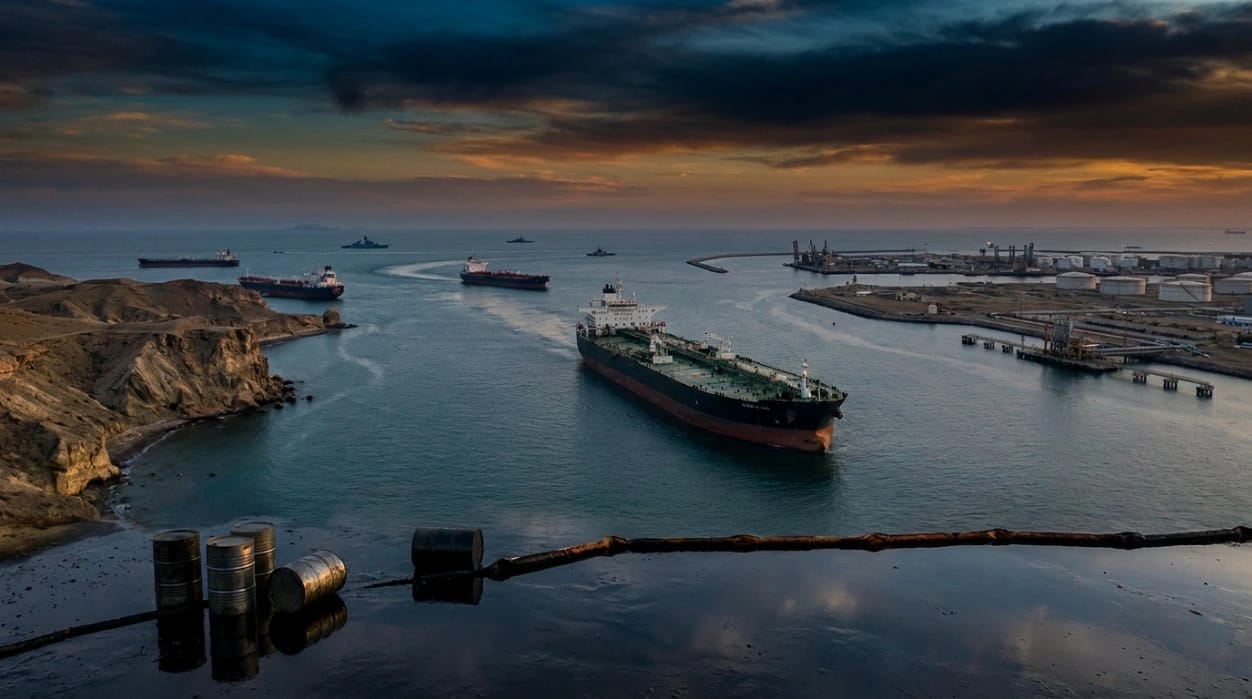
Oil Prices Above $90: What Could Push Crude Toward $100
Oil prices have crossed an important psychological line again.
Brent crude is trading above $90 per barrel, while U.S. West Texas Intermediate has climbed above $85 as uncertainty surrounding one of the world’s most important energy shipping routes intensifies.
On August 19, Brent crude futures were around $91.28 per barrel, while WTI was near $85.31. Oil had risen for four consecutive sessions as traders reacted to uncertainty over exports through the Strait of Hormuz.
The immediate reason is geopolitical.
But the bigger oil story is more complicated.
The market is currently being pulled in opposite directions.
On one side, restricted Middle Eastern exports, unusually low inventories, shipping risks and geopolitical tensions are supporting prices.
On the other, high fuel costs and weaker economic activity are beginning to destroy demand.
That creates an unusual question:
Could oil reach $100 again—or will weaker demand stop the rally first?
The answer matters far beyond energy markets.
Oil affects transportation, aviation, manufacturing, agriculture and shipping. Higher energy costs can eventually appear in consumer prices, complicating efforts by central banks to control inflation.
And the latest data show just how uncertain the outlook has become.
The U.S. Energy Information Administration now expects Brent crude to average approximately $85 per barrel in the third quarter of 2026, $11 higher than its previous forecast, before falling toward $78 in the fourth quarter if traffic through Hormuz increases and disrupted production returns.
Meanwhile, the International Energy Agency has cut its 2026 oil-supply forecast sharply because of Middle Eastern disruptions and now expects global oil demand to decline this year.
Oil therefore sits at the center of a struggle between geopolitical scarcity and economic demand destruction.
Here are seven forces that could decide what happens next.
1. The Strait of Hormuz Is Once Again the Biggest Oil Risk
To understand why oil prices are above $90, start with geography.
The Strait of Hormuz is a narrow waterway connecting the Persian Gulf with the Gulf of Oman and global shipping routes.
It is one of the world’s most strategically important energy chokepoints.
Major oil and gas producers in the Gulf depend heavily on the route to reach international customers.
When Hormuz operates normally, markets rarely think about it.
When shipping through the strait becomes uncertain, the calculation changes immediately.
That is what is happening now.
The current U.S.-Iran confrontation has left shipping activity disrupted, while uncertainty over whether the strait is effectively open has made traders reluctant to assume normal oil flows will resume quickly.
Reuters reported on August 19 that uncertainty over Hormuz exports pushed oil higher for a fourth consecutive session. Meanwhile, Iraq has approved new mechanisms aimed at moving crude through alternative arrangements, and some Chinese shipping companies are rerouting cargoes to reduce exposure to both Hormuz and Bab al-Mandeb.
These adaptations matter.
But alternative routes cannot instantly replace the enormous amount of energy infrastructure built around Hormuz.
That is why the market is adding a geopolitical risk premium to oil.
Buyers are not simply paying for today’s physical crude.
They are pricing the possibility that tomorrow’s supply could become harder to obtain.
This also explains why prices can move sharply even without a complete shutdown.
Oil markets anticipate the future.
If traders believe supply conditions may worsen, futures prices can rise before the missing barrels fully appear in physical markets.
2. The Oil Market Is Tighter Than the Price Alone Suggests
A $90 Brent price is expensive, but it does not fully explain the stress underneath the market.
The IEA’s August Oil Market Report says global oil supply is being heavily affected by the Middle East conflict. Its latest outlook points to a substantial supply contraction in 2026, with disruptions around Hormuz and regional production weighing on available barrels.
The EIA is also seeing tightening inventories.
Its August outlook expects U.S. commercial crude inventories to remain below the 2021–2025 five-year low through the end of 2026, partly because strong refinery activity and exports have reduced stocks.
This matters because inventories function as a cushion.
When supply temporarily falls, countries and companies can draw down stored crude rather than immediately reducing consumption.
But the thinner that cushion becomes, the more sensitive prices can become to another disruption.
Imagine the global oil system as a reservoir.
If the reservoir is nearly full, losing one supply source is manageable.
If the reservoir is already low, the same disruption becomes more serious.
This is why relatively small geopolitical developments can produce disproportionate price reactions when inventories are tight.
It also connects directly with our earlier analysis of why oil prices were rising again.
That earlier rally showed how quickly geopolitical risk could return to energy markets.
The current situation has moved further.
The question is no longer merely whether geopolitical tensions can lift crude.
It is whether prolonged disruption can keep Brent above $90 long enough to create another inflationary shock.
3. $100 Oil Is Possible—but It Is Not the Base Case
Whenever Brent crosses $90, one number quickly returns to the conversation:
$100.
Psychologically, triple-digit oil carries enormous significance.
It signals stress to consumers, policymakers and financial markets.
Could Brent get there?
Yes.
But several things would probably need to go wrong simultaneously.
A prolonged Hormuz disruption would be the clearest catalyst.
Additional attacks on tankers or energy infrastructure could add another risk premium.
Further reductions in Middle Eastern exports could tighten physical supply.
A major disruption to Russian exports could compound the problem.
Low inventories would amplify those shocks.
In that scenario, moving from roughly $91 to $100 would not require an extraordinary percentage increase.
But the EIA’s latest forecast does not treat sustained $100 oil as the most likely outcome.
Its August Short-Term Energy Outlook expects Brent to average around $85 in Q3 2026 and then decline toward $78 in Q4 as Hormuz traffic gradually improves and shut-in production begins returning.
The agency expects Brent to average about $69 in 2027 as production recovers and inventories rebuild.
This illustrates the market’s central tension.
A geopolitical escalation could push prices higher very quickly.
A normalization of shipping could send them lower almost as quickly.
Oil therefore has substantial upside risk without necessarily having a permanently bullish fundamental outlook.
That distinction is essential.
4. High Oil Prices Are Starting to Destroy Demand
The strongest force preventing oil from rising indefinitely may be oil itself.
High prices change behavior.
Consumers drive less.
Airlines face higher fuel costs.
Businesses reduce transportation use.
Factories become more cautious.
Governments introduce conservation measures.
Economic growth slows.
Eventually, expensive energy begins reducing demand for energy.
Economists call this demand destruction.
And there are signs it is already happening.
The IEA’s August 2026 Oil Market Report expects global oil demand to decline by approximately 1.6 million barrels per day this year.
It says elevated fuel prices are putting additional downward pressure on consumption, while the continued Hormuz disruption is affecting product availability and international supply chains.
IEA Oil Market Report — August 2026
This creates an unusual feedback loop:
Supply disruption pushes prices higher.
Higher prices weaken demand.
Weaker demand limits further price increases.
That mechanism may explain why oil has not risen even more dramatically despite severe geopolitical uncertainty.
It also means a $100 rally could contain the seeds of its own reversal.
The higher prices go, the greater the economic pressure becomes.
This connects directly with the broader global economy outlook for 2026.
A prolonged energy shock can reduce household purchasing power, increase business costs and weaken economic growth.
The result could eventually lower oil demand enough to pull prices back down.
5. OPEC and the IEA Are Sending Very Different Demand Signals
One of the most interesting parts of the current oil market is that major forecasting organizations do not fully agree about demand.
The IEA expects global oil consumption to decline substantially in 2026.
OPEC remains considerably more optimistic.
Its latest Monthly Oil Market Report forecasts global oil demand to grow by about 0.6 million barrels per day in 2026, driven mainly by non-OECD economies.
OPEC Monthly Oil Market Report
That is a remarkable difference.
It means two of the world’s most closely watched oil-market institutions see the same year very differently.
Why?
Forecasts depend on assumptions about:
economic growth,
fuel prices,
transportation,
industrial activity,
government policies,
and how consumers respond to disruptions.
The difference also shows why oil forecasting is exceptionally difficult in 2026.
This is not a normal supply-and-demand cycle.
The market is being shaped simultaneously by war, shipping disruption, high prices, changing trade routes and economic weakness.
For investors and businesses, the lesson is straightforward:
Do not build plans around one oil forecast.
Instead, think in scenarios.
If the IEA’s weaker-demand view proves correct, $90 oil could become increasingly difficult to sustain once supply conditions improve.
If demand holds up better than expected while Middle Eastern supply remains constrained, the path toward $100 becomes much easier.
6. Consumers Are Already Feeling the Energy Shock
Oil-market movements eventually reach ordinary households.
The effect is visible in U.S. fuel prices.
According to the EIA, the national average price of regular gasoline was approximately $4.05 per gallon on August 17, around 92 cents higher than a year earlier.
Diesel was even more striking.
The national average reached approximately $5.45 per gallon, roughly $1.74 higher than a year earlier.
Diesel matters particularly because it moves the economy.
Trucks use it.
Construction equipment uses it.
Agricultural machinery uses it.
Many logistics networks depend on it.
When diesel becomes expensive, transportation costs can spread through supply chains.
A supermarket does not need to buy crude oil directly to feel an oil shock.
Its suppliers transport food.
Packaging materials need transportation.
Warehouses use energy.
Employees drive to work.
Eventually, some of those costs can appear in prices.
This is why energy markets have repeatedly appeared in The Light Span’s weekly coverage of oil, markets and global power shifts.
Oil remains one of the fastest transmission mechanisms between geopolitics and household economics.
A conflict thousands of miles away can eventually affect what someone pays at a petrol station or supermarket.
7. Oil Could Become an Inflation Problem Again
Central banks spent years trying to bring inflation under control.
Energy prices can make that job much harder.
Oil affects inflation through several channels.
The most obvious is fuel.
Higher crude prices can raise gasoline, diesel and aviation-fuel costs.
But the indirect effects can become broader.
Transportation becomes more expensive.
Airfares can rise.
Shipping costs increase.
Manufacturing inputs become more expensive.
Agricultural production costs can rise.
Businesses may eventually pass some of those increases to customers.
The danger is not necessarily one brief spike in Brent.
Central banks understand that commodity prices fluctuate.
The bigger risk is persistence.
If Brent remains around $90 or climbs toward $100 for months, businesses and consumers have more time to absorb higher costs.
Inflation expectations could also change.
Workers may demand higher wages.
Businesses may become more willing to increase prices.
Central banks could then become more cautious about cutting interest rates.
That would connect the oil shock with financial markets, mortgages, corporate borrowing and economic growth.
This is why the current rally matters even to people who never trade oil.
The real economic question is not:
“Did Brent rise today?”
It is:
“How long will expensive oil remain with us?”
Why Oil Hasn’t Already Exploded Far Above $100
Given the severity of the geopolitical situation, it is reasonable to ask why Brent is only around $91.
Several stabilizers are working.
Alternative export routes are being used.
Producers and buyers are adapting logistics.
Some cargoes are moving through unconventional arrangements.
Demand is weakening.
High prices themselves are discouraging consumption.
And markets still expect that the current disruption will eventually ease.
These forces prevent every geopolitical headline from translating directly into a massive oil spike.
The EIA’s changing forecasts show how quickly expectations can move.
In July, the agency expected Brent to average only $74 in Q3 as supply conditions improved. Its August forecast raised that figure to approximately $85 after renewed Hormuz disruption reduced shipments and inventories.
That $11 change in one month demonstrates just how dependent today’s oil outlook is on geopolitical assumptions.
The market is not confidently predicting permanent scarcity.
It is pricing uncertainty.
Three Scenarios for Oil Prices Through the Rest of 2026
Rather than pretending one exact price forecast will be correct, three scenarios are more useful.
Scenario 1: Hormuz Conditions Improve
Shipping gradually normalizes.
Middle Eastern production returns.
Inventories begin rebuilding.
Demand remains weak because of high fuel prices.
Under this scenario, Brent could retreat from current levels and move closer to the EIA’s expected $78 Q4 average.
This is broadly the current EIA base case.
Scenario 2: Disruption Continues
Hormuz remains unreliable.
Alternative routes prevent complete shortages but cannot fully replace normal Gulf exports.
Demand weakens enough to stop prices exploding higher.
Brent could remain elevated and volatile around today’s levels.
This would be particularly uncomfortable for consumers because the economic damage would accumulate even without dramatic new price records.
Scenario 3: The Conflict Escalates
Shipping disruption becomes more severe.
Additional energy infrastructure is damaged.
Russian or Red Sea supply routes face further problems.
Inventories fall faster.
In that environment, $100 Brent becomes much more plausible, and temporary moves above that level could occur.
But such a rally would likely accelerate inflation and demand destruction, eventually creating downward pressure of its own.
What Should Businesses and Consumers Watch Next?
Forget trying to predict every daily price movement.
Watch the variables that actually determine the market.
Strait of Hormuz traffic
A sustained recovery in tanker traffic would remove one of the largest current risk premiums.
Middle Eastern production
Returning shut-in barrels would help rebuild global supply.
Global inventories
Falling inventories make the market more vulnerable. Rebuilding stocks would reduce that vulnerability.
U.S. petroleum data
Weekly crude and fuel inventories provide an important signal about physical market conditions.
IEA and OPEC demand forecasts
The gap between their outlooks is unusually important this year.
Diplomatic developments
Any credible U.S.-Iran agreement affecting Hormuz could move oil rapidly.
Consumer demand
If expensive fuel continues weakening consumption, it could become the strongest force pushing prices lower.
FAQs
Why are oil prices above $90?
The immediate driver is uncertainty surrounding oil exports through the Strait of Hormuz, combined with reduced inventories and broader Middle Eastern supply risks. Brent was around $91.28 on August 19.
Could oil reach $100 in 2026?
Yes. A worsening Hormuz disruption or additional supply outages could push Brent toward or above $100. However, the EIA’s current base case expects prices to fall later in 2026 as shipping and production recover.
What is the EIA oil price forecast?
The EIA currently forecasts Brent to average around $85 per barrel in Q3 2026 and about $78 in Q4, before averaging around $69 in 2027.
Is global oil demand rising or falling?
Forecasts disagree. The IEA expects global demand to decline by about 1.6 million barrels per day in 2026, while OPEC currently expects growth of roughly 0.6 million barrels per day.
Why is the Strait of Hormuz important?
It is one of the world’s most important energy shipping chokepoints and provides access from major Persian Gulf oil producers to global markets. Disruption can therefore affect worldwide supply expectations.
Will higher oil prices increase inflation?
If elevated prices persist, they can increase gasoline, diesel, transportation, aviation and production costs, potentially adding broader inflationary pressure.
The Light Span Perspective
The most important fact about today’s oil market is not simply that oil prices are above $90.
It is why they are there.
The world is experiencing an unusual collision between two powerful forces.
Geopolitics is pushing oil upward.
Economics is pushing demand downward.
The Strait of Hormuz crisis has demonstrated that the global economy remains deeply dependent on a relatively small number of energy chokepoints.
Alternative routes can help.
Inventories can help.
Other producers can respond.
But none of those solutions can instantly replace the enormous flow of energy normally supported by stable Gulf shipping.
That vulnerability explains the risk premium embedded in today’s prices.
Yet $100 oil is not inevitable.
High prices are already weakening consumption. The IEA has sharply reduced its demand outlook, and the EIA expects prices to decline if shipping normalizes and production returns.
This means the next major oil move may not be determined by OPEC alone.
It could be determined by which happens first:
Does supply recover?
Or does the geopolitical situation deteriorate further?
If Hormuz gradually returns toward normal operations, today’s $90-plus Brent price could eventually look like another temporary geopolitical spike.
If the disruption deepens while inventories continue falling, $100 will stop looking like a dramatic prediction and start looking like a realistic market scenario.
For consumers, businesses and policymakers, the distinction is enormous.
A brief spike creates pain.
A prolonged energy shock changes economic behavior.
It can weaken growth, revive inflation and force central banks to rethink interest-rate decisions.
That is why oil has returned to the center of the global economic story.
The world may be investing rapidly in renewable energy, electric vehicles and new technologies, but 2026 has delivered a powerful reminder:
oil still has the ability to transmit a geopolitical crisis into almost every corner of the global economy.
Continue reading more

